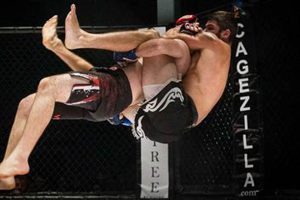
Mixed martial arts (MMA) training encompasses a broad spectrum of disciplines, blending combat sports like boxing, wrestling, and Brazilian Jiu-Jitsu with physical conditioning elements. This multifaceted approach develops skills applicable to both competitive fighting and overall fitness. An example would be a training regimen incorporating sparring, strength training, and flexibility exercises.
The integrated nature of this training offers several advantages. It improves cardiovascular health, builds strength and endurance, enhances flexibility and coordination, and cultivates discipline and mental resilience. Historically, various combat styles have been practiced across cultures, but the modern concept of MMA emerged from the desire to determine the most effective fighting system in a controlled environment. This led to the evolution of training methods that combine striking, grappling, and ground fighting techniques to produce well-rounded athletes.
This holistic approach to combat sports and physical conditioning will be further explored through examinations of specific training methods, the benefits for overall well-being, and the historical development of modern MMA.
Training Tips for Mixed Martial Arts
This section offers practical guidance for individuals engaging in mixed martial arts training, focusing on key areas for maximizing effectiveness and safety.
Tip 1: Prioritize Proper Warm-up: A thorough warm-up prepares the body for intense physical activity, reducing the risk of injury. Dynamic stretching, light cardio, and mobility exercises are recommended.
Tip 2: Focus on Fundamental Techniques: Mastery of basic striking, grappling, and takedown techniques forms a solid foundation for advanced training. Consistent practice and refinement of these fundamentals are crucial.
Tip 3: Incorporate Strength and Conditioning: Strength training builds power and explosiveness, while conditioning enhances endurance and resilience. A balanced program should address both aspects.
Tip 4: Train with Qualified Instructors: Expert guidance ensures proper technique and minimizes the risk of injury. Seek out experienced coaches with a proven track record.
Tip 5: Maintain Consistent Training Schedule: Regular training sessions promote muscle memory and skill development. Establish a schedule that aligns with individual goals and commitments.
Tip 6: Prioritize Recovery: Adequate rest, proper nutrition, and active recovery methods allow the body to repair and rebuild after intense training. Ignoring recovery can hinder progress and increase injury risk.
Tip 7: Listen to Your Body: Recognizing and respecting physical limitations is essential for injury prevention. Pushing through pain can lead to long-term problems.
By adhering to these training tips, individuals can optimize their performance, reduce injury risk, and achieve their full potential in mixed martial arts training. Consistent effort, proper guidance, and a focus on foundational principles contribute significantly to long-term success.
These principles underline the importance of a holistic approach to training, encompassing physical conditioning, technical skill development, and injury prevention strategies. This comprehensive approach is crucial for success in the demanding world of mixed martial arts.
1. Combat Techniques

Combat techniques form the core of mixed martial arts training, differentiating it from other fitness regimens. An understanding of these techniques is crucial for both competitive fighters and those seeking fitness benefits through MMA training. Effective execution requires not only physical prowess but also strategic thinking and precise timing.
- Striking
Striking encompasses punches, kicks, knees, and elbows, derived from disciplines like boxing, Muay Thai, and karate. Developing effective striking techniques requires practice on pads, heavy bags, and through controlled sparring. Precision, power, and footwork are key elements. For example, a well-timed jab can disrupt an opponent’s balance, while a powerful roundhouse kick can deliver a decisive blow. In a fitness context, striking drills improve coordination, cardiovascular health, and overall body strength.
- Grappling
Grappling involves techniques like clinching, takedowns, and throws, often drawing from wrestling, judo, and sambo. Mastery of grappling allows control of an opponents movement and positioning, creating opportunities for submissions or ground-and-pound. A double-leg takedown, for instance, can bring an opponent to the ground, shifting the fights dynamic. From a fitness perspective, grappling builds functional strength, improves balance, and enhances body awareness.
- Submissions
Submissions aim to force an opponent to concede defeat through joint locks or chokes, primarily utilizing techniques from Brazilian Jiu-Jitsu and other grappling arts. Examples include armbars, triangle chokes, and heel hooks. These techniques require technical precision and leverage. While less applicable in a pure fitness setting, the principles of leverage and body mechanics learned through submissions training can translate to improved functional strength and body control.
- Defensive Maneuvers
Defensive maneuvers are as critical as offensive techniques, encompassing blocks, parries, slips, and sprawls. Effective defense mitigates damage and creates opportunities for counterattacks. A well-timed sprawl can prevent a takedown, while a parry can deflect a potentially damaging strike. These defensive skills contribute to safety and control during training, crucial for both competitive and fitness-oriented practitioners.
The interplay of these combat techniques defines the dynamic nature of mixed martial arts. Proficiency in each area contributes to a well-rounded skill set, essential for both competitive success and maximizing the fitness benefits derived from MMA training. The strategic application of these techniques, combined with physical conditioning and mental fortitude, distinguishes mixed martial arts as a comprehensive combat sport and fitness system.
2. Physical Conditioning

Physical conditioning forms the bedrock of effective mixed martial arts training. It provides the strength, endurance, speed, and flexibility necessary to execute techniques effectively and withstand the rigors of combat. The connection between physical conditioning and MMA is inextricable; inadequate conditioning limits technical proficiency and increases susceptibility to injury. High-intensity interval training (HIIT), for example, replicates the demanding, intermittent nature of a fight, improving both anaerobic and aerobic capacity. Strength training programs focused on compound movements, such as squats, deadlifts, and overhead presses, build the functional strength essential for takedowns, grappling, and striking with power. Plyometrics, like box jumps and medicine ball throws, develop explosive power crucial for quick, decisive movements.
The importance of physical conditioning extends beyond mere execution of techniques. A well-conditioned athlete recovers more quickly between rounds, sustains performance throughout a fight, and demonstrates greater resilience to fatigue. This resilience translates to improved sparring performance, enhanced ability to absorb strikes, and increased capacity to maintain offensive pressure. Consider a fighter defending a takedown attempt; the strength and endurance derived from dedicated physical conditioning allow them to resist the opponent’s advance and potentially reverse the position. Similarly, a fighter with superior cardiovascular fitness can maintain a higher output of strikes throughout a fight, increasing the likelihood of a knockout or technical knockout victory.
In summary, physical conditioning is not merely a supplementary component of MMA training; it is a fundamental pillar upon which technical skill and tactical acumen are built. A comprehensive conditioning program targeting strength, power, endurance, and flexibility is essential for maximizing performance, minimizing injury risk, and achieving success in mixed martial arts. Negligence in this area compromises both competitive potential and the long-term health of the athlete. This understanding underscores the necessity of integrating a well-structured physical conditioning program into any serious MMA training regimen.
3. Mental Resilience

Mental resilience plays a critical role in mixed martial arts, impacting performance and dictating outcomes as significantly as physical prowess. The demanding nature of MMA, both physically and emotionally, necessitates a robust mental framework. A fighter’s ability to manage fear, control emotions under pressure, and maintain focus amidst chaos often determines success or failure. Consider a fighter facing a significant reach disadvantage; the mental fortitude to persevere despite repeated setbacks and maintain a strategic approach is crucial for overcoming such challenges. Similarly, the ability to rebound from a knockdown or a lost round requires mental resilience, allowing the fighter to adapt and continue competing effectively.
This mental toughness extends beyond the competitive arena. The discipline and perseverance cultivated through MMA training translate to benefits in various life domains. Facing challenging situations at work or in personal life becomes more manageable with the mental resilience honed through rigorous training. The ability to maintain composure under pressure, developed through sparring and competition, becomes a valuable asset in navigating daily stressors. Furthermore, the mental discipline required to adhere to a demanding training schedule, including dietary restrictions and consistent physical exertion, fosters self-control and strengthens resolve in other aspects of life. For example, the mental fortitude required to overcome the physical discomfort of intense training can translate into the perseverance needed to achieve long-term personal or professional goals.
In conclusion, mental resilience is not a peripheral attribute in mixed martial arts; it is a core component, integral to both competitive success and the broader benefits derived from training. Cultivating mental toughness through MMA enhances not only performance within the cage or ring but also equips individuals with valuable coping mechanisms and psychological tools applicable to various life challenges. The ability to manage stress, overcome adversity, and maintain focus under pressure, all cultivated through MMA training, are invaluable assets in navigating the complexities of life. This understanding underscores the profound impact of MMA training, extending beyond physical fitness to encompass mental and emotional well-being.
4. Nutritional Strategies

Nutritional strategies are integral to success in mixed martial arts, impacting performance, recovery, and overall well-being. Appropriate caloric intake, macronutrient balance, and micronutrient sufficiency are crucial for maximizing training adaptations and ensuring optimal performance during competition. For example, a fighter preparing for a weight-class specific competition must adhere to a strict dietary regimen to meet weight requirements while maintaining energy levels and strength. Manipulating macronutrient ratios, such as increasing protein intake to support muscle repair and growth following intense training, demonstrates a practical application of nutritional principles within MMA. Hydration also plays a vital role, influencing performance and recovery, particularly in weight-cutting scenarios where dehydration can be a significant concern.
Understanding the relationship between nutrition and performance extends beyond basic caloric needs. Specific nutritional interventions can address particular training demands. For instance, consuming carbohydrates before and after training replenishes glycogen stores, crucial for sustaining energy levels and promoting recovery. Adequate protein intake facilitates muscle protein synthesis, essential for repairing muscle damage incurred during training and promoting muscle growth. Furthermore, strategic supplementation, under the guidance of a qualified professional, can address specific micronutrient deficiencies or support particular physiological functions. For example, iron supplementation might be necessary for athletes experiencing iron deficiency anemia, a condition that can impair oxygen transport and negatively impact endurance performance.
In summary, nutritional strategies are not merely supplementary considerations in mixed martial arts; they are fundamental components of a comprehensive training program. Strategic manipulation of dietary intake, including macronutrient ratios, micronutrient sufficiency, and hydration protocols, significantly impacts performance, recovery, and overall health. Negligence in this area can compromise training adaptations, increase injury risk, and ultimately limit an athlete’s potential. Integrating sound nutritional principles, tailored to individual needs and training demands, is essential for maximizing performance and achieving success in the demanding world of mixed martial arts.
5. Injury Prevention

Injury prevention is paramount in mixed martial arts, ensuring training longevity and maximizing performance potential. The demanding physicality of MMA exposes participants to a high risk of injury. A proactive approach to injury prevention, integrating various strategies, is crucial for mitigating these risks and maintaining long-term health. Neglecting preventative measures can lead to significant setbacks, hindering progress and potentially jeopardizing an athlete’s career.
- Warm-up and Cool-down
Proper warm-up prepares the body for the stresses of training, increasing blood flow to muscles, improving joint mobility, and enhancing neuromuscular function. Dynamic stretches, such as arm circles, leg swings, and torso twists, are more effective than static stretches before training. Conversely, a cool-down following intense activity promotes recovery by gradually reducing heart rate and body temperature, while static stretching during cool-down improves flexibility and reduces muscle soreness. For example, performing a series of dynamic stretches targeting major muscle groups before sparring reduces the risk of muscle strains. Similarly, incorporating static stretches for the hips and legs after training can alleviate muscle tightness and improve flexibility.
- Proper Technique
Correct execution of techniques is crucial for minimizing injury risk. Improper form, particularly during striking and grappling, places undue stress on joints and ligaments, increasing the likelihood of sprains, strains, and fractures. Learning proper techniques from qualified instructors and consistently reinforcing correct form during practice are essential for injury prevention. For example, landing a punch with proper alignment of the wrist and fist reduces the risk of wrist injury. Similarly, executing a takedown with controlled movement and proper body mechanics minimizes the risk of knee and ankle injuries for both the offensive and defensive fighter.
- Progressive Overload
Progressive overload involves gradually increasing training intensity and volume over time, allowing the body to adapt and strengthen progressively. Attempting to progress too quickly overwhelms the body’s adaptive capacity, increasing susceptibility to injury. Gradual increases in training volume, intensity, or resistance provide the stimulus necessary for adaptation while minimizing injury risk. For instance, gradually increasing the weight lifted during strength training sessions allows muscles and connective tissues to adapt and strengthen over time, reducing the risk of strains or tears. Similarly, progressively increasing the duration and intensity of sparring sessions allows the cardiovascular system and musculoskeletal system to adapt to the demands of combat, minimizing the risk of fatigue-related injuries.
- Rest and Recovery
Adequate rest and recovery are essential for allowing the body to repair and rebuild following intense training. Overtraining compromises the body’s ability to recover, increasing the risk of injury and hindering performance. Incorporating rest days into the training schedule, prioritizing sleep quality, and utilizing active recovery methods, such as light cardio or mobility work, promote tissue repair and reduce inflammation. For example, taking a rest day after a particularly intense training session allows muscles and joints to recover, reducing the risk of overuse injuries. Similarly, prioritizing sleep ensures adequate hormone production, crucial for muscle repair and growth, further contributing to injury prevention.
These facets of injury prevention are interconnected and contribute synergistically to maintaining a healthy training regimen. A holistic approach, integrating proper warm-up and cool-down routines, emphasizing correct technique, adhering to principles of progressive overload, and prioritizing rest and recovery, optimizes training outcomes while minimizing injury risk. This comprehensive approach to injury prevention ensures the longevity and sustainability of an athlete’s training, enabling consistent progress and maximizing potential within the demanding realm of mixed martial arts.
6. Skill Development

Skill development is a cornerstone of mixed martial arts, inextricably linked to both competitive success and the realization of fitness benefits. Consistent, dedicated practice translates to improved technique execution, enhanced strategic thinking, and heightened adaptability within dynamic combat scenarios. The acquisition and refinement of skills across various disciplinesstriking, grappling, and submissionsform the foundation upon which effective MMA performance is built. Consider a fighter consistently drilling takedown defense; through repetition and refinement, the fighter develops muscle memory and reaction time, improving their ability to defend against takedown attempts in a live sparring or competitive setting. Similarly, dedicated practice of striking combinations on a heavy bag enhances precision, timing, and power, translating to more effective offensive capabilities.
The benefits of skill development extend beyond improved technical proficiency. As skills progress, individuals experience increased confidence and self-efficacy, contributing to mental resilience and overall well-being. Mastery of complex techniques provides a sense of accomplishment, fostering motivation and promoting continued engagement in training. Furthermore, skill development fosters a deeper understanding of the nuances of combat, enhancing strategic thinking and tactical decision-making. For example, a fighter proficient in both striking and grappling can seamlessly transition between the two, exploiting an opponent’s weaknesses and dictating the pace of a fight. This adaptability, born from dedicated skill development, is a hallmark of successful MMA practitioners.
In conclusion, skill development is not merely a process of acquiring techniques; it represents a journey of continuous improvement, fostering physical and mental growth. The dedicated pursuit of skill mastery unlocks potential within the multifaceted realm of mixed martial arts, translating to enhanced performance, increased confidence, and a deeper understanding of the complexities of combat. This pursuit, regardless of competitive aspirations, provides a pathway for personal development and the realization of the myriad benefits associated with mixed martial arts training.
Frequently Asked Questions
This section addresses common inquiries regarding mixed martial arts training, providing concise and informative responses.
Question 1: Is mixed martial arts training suitable for all fitness levels?
Modified training programs can accommodate various fitness levels. Individuals should consult with qualified instructors to determine appropriate training intensity and modifications based on individual needs and capabilities. Beginners often start with fundamental movements and gradually progress to more complex techniques as fitness improves.
Question 2: How frequently should one train to see results?
Training frequency depends on individual goals and recovery capacity. Consistent training, even two or three times per week, yields noticeable improvements in fitness. More intensive training regimens require careful attention to recovery to prevent overtraining and injury.
Question 3: What equipment is necessary for MMA training?
Essential equipment includes hand wraps, boxing gloves, shin guards, and mouthguards. Other equipment, such as headgear and groin protection, may be recommended or required depending on the training environment and specific activities. Gyms often provide communal equipment, but individuals may prefer to purchase their own for hygiene and personalized fit.
Question 4: How does MMA training differ from traditional martial arts?
Mixed martial arts integrates techniques from various martial arts disciplines, encompassing striking, grappling, and submissions. Traditional martial arts often focus on a specific discipline, such as karate or judo. MMA training emphasizes practical application and effectiveness in a dynamic combat setting.
Question 5: Can MMA training improve self-defense capabilities?
MMA training equips individuals with practical self-defense skills by developing proficiency in striking, grappling, and takedowns. The emphasis on realistic combat scenarios enhances situational awareness and reaction time, valuable assets in self-defense situations. However, responsible application and adherence to legal and ethical considerations are paramount.
Question 6: Are there age restrictions for participating in MMA training?
While some competitive organizations impose age restrictions, training programs can be adapted for various age groups. Children and adolescents can participate in modified training programs focusing on fundamental movement skills, discipline, and physical fitness. Age-appropriate training emphasizes safety and avoids high-impact or high-risk activities.
Addressing these common questions provides a clearer understanding of mixed martial arts training, its benefits, and practical considerations. Individual circumstances and goals should be considered when determining the suitability and approach to MMA training.
The subsequent section will delve deeper into specific training methodologies within mixed martial arts.
Fight and Fitness MMA
This exploration of mixed martial arts training has highlighted its multifaceted nature, encompassing physical conditioning, technical skill development, mental resilience, nutritional strategies, and injury prevention. The interconnectedness of these elements underscores the comprehensive nature of MMA, differentiating it from other fitness modalities. From the precise execution of a jab to the strategic application of a takedown, from the mental fortitude required to overcome adversity to the nutritional discipline necessary for optimal performance, MMA demands a holistic approach. Its effectiveness in fostering physical fitness, mental toughness, and self-defense capabilities positions it as a unique and demanding discipline.
The evolving landscape of mixed martial arts continues to refine training methodologies and expand its reach. Further investigation into the physiological and psychological benefits of MMA training promises to reveal its full potential, both within the competitive arena and as a means of achieving comprehensive personal development. The dedication, discipline, and resilience cultivated through MMA extend beyond the gym, equipping individuals with valuable tools for navigating life’s challenges and striving for continuous self-improvement. This enduring pursuit of excellence, both physical and mental, defines the essence of mixed martial arts.