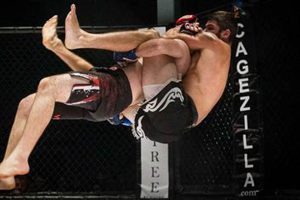
Mixed martial arts (MMA) is a full-contact combat sport that allows a wide variety of fighting techniques, from striking and grappling to takedowns and submissions. A typical MMA bout takes place inside a cage or a fenced ring and can involve athletes from diverse martial arts backgrounds such as boxing, wrestling, Brazilian Jiu-Jitsu, Muay Thai, and Judo. For example, a fighter might use boxing combinations to set up a takedown, then transition to a submission hold on the ground.
This dynamic blend of disciplines makes the sport highly unpredictable and strategically complex. Its popularity stems from the excitement generated by the diverse skill sets on display and the potential for dramatic finishes. Historically, similar combat forms existed in ancient civilizations, but the modern iteration of MMA emerged in the early 1990s. The sport’s evolution has led to the development of well-defined rules and weight classes, promoting both safety and fair competition. This has been crucial for its growth and acceptance as a mainstream sport.
Further exploration of this topic will cover the rules and regulations governing the sport, the training regimens followed by professional fighters, and the major organizations that promote MMA events worldwide. This information provides a more complete understanding of the sport’s intricacies and global impact.
Tips for Understanding Mixed Martial Arts
These tips provide a framework for appreciating the complexities of mixed martial arts competition.
Tip 1: Learn the Different Fighting Styles: Familiarization with the various martial arts disciplines employed in MMA, such as Muay Thai, Brazilian Jiu-Jitsu, and wrestling, enhances viewing comprehension. Recognizing the strengths and weaknesses of each style allows for a deeper understanding of fighter strategies.
Tip 2: Understand the Scoring System: Judges score rounds based on effective striking, grappling, control, aggression, and defense. Knowing how these criteria are applied helps viewers interpret the judges’ decisions and appreciate the nuances of a fight.
Tip 3: Pay Attention to Weight Classes: MMA competitions are divided into weight classes to ensure fair matchups. Recognizing the impact of size and strength differences between weight classes adds another layer of analysis to the competition.
Tip 4: Observe Fighter Conditioning: Cardiovascular fitness and muscular endurance are crucial in MMA. Observing a fighter’s ability to maintain pace and power throughout a bout offers insights into their overall preparedness.
Tip 5: Recognize Strategic Approaches: Fighters often employ specific game plans based on their strengths and their opponent’s weaknesses. Recognizing these strategies, whether it’s a focus on striking, takedowns, or submissions, enhances the viewing experience.
Tip 6: Appreciate the Role of Coaching: Corner advice between rounds plays a significant role in a fighter’s performance. Listening to the coaches’ instructions can illuminate tactical adjustments and motivations within a fight.
By considering these elements, viewers can move beyond simply watching fights to developing a more sophisticated understanding of mixed martial arts competition. This understanding enhances appreciation for the athleticism, skill, and strategy involved in the sport.
This foundation leads to a more thorough exploration of specific aspects of MMA, such as training methodologies, the evolution of fighting techniques, and the future of the sport.
1. Combat Sport

Understanding mixed martial arts (MMA) requires placing it within the broader context of combat sports. Combat sports involve physical competition between two individuals using regulated techniques to achieve victory. This framework is essential for comprehending the nature and purpose of MMA.
- Regulated Violence:
Combat sports, including MMA, operate under specific rules designed to mitigate the risk of serious injury while maintaining a competitive environment. These rules dictate permissible techniques, weight classes, and safety measures. For instance, biting and eye-gouging are typically prohibited. This structured framework distinguishes MMA from unregulated street fighting.
- Skill and Strategy:
Success in combat sports relies on more than just physical strength. Technical skill, strategic thinking, and mental fortitude are crucial components. In MMA, a fighter might use feints and footwork to create an opening for a takedown, demonstrating the importance of strategy. This emphasis on skill separates combat sports from mere brawling.
- Physical and Mental Conditioning:
Combat sports demand high levels of physical fitness, including strength, speed, endurance, and flexibility. Mental resilience is equally important for managing stress, overcoming adversity, and maintaining focus during intense competition. The rigorous training required for MMA exemplifies this aspect of combat sports.
- Competition and Entertainment:
Combat sports serve a dual purpose: providing a platform for athletes to test their skills and offering entertainment for spectators. The popularity of MMA demonstrates the public’s interest in witnessing skilled competition. This entertainment aspect adds another dimension to the role of combat sports in society.
By examining these facets of combat sports, the essence of MMA becomes clearer. It is a complex and demanding sport that combines physical prowess, technical skill, and strategic thinking within a regulated framework. This nuanced understanding allows for greater appreciation of the athleticism and dedication required to succeed in MMA.
2. Full Contact

The “full contact” nature of mixed martial arts is a defining characteristic, directly influencing its strategic complexity and differentiating it from other combat sports. Unlike boxing or kickboxing, which primarily focus on striking, MMA permits a wider range of techniques, including grappling, takedowns, and submissions. This full-contact element significantly impacts fight dynamics. For instance, a fighter might use striking to set up a takedown, transitioning to grappling and seeking a submission on the ground. This fluidity between striking and grappling necessitates a more comprehensive skillset and creates a higher degree of strategic depth. A real-life example is the career of Georges St-Pierre, a former UFC champion who effectively combined wrestling and striking to dominate opponents.
The full-contact aspect of MMA also contributes to its demanding physical requirements. Fighters must be prepared to both deliver and absorb strikes, as well as engage in physically demanding grappling exchanges. This necessitates rigorous training regimens encompassing strength and conditioning, striking, and grappling disciplines. Furthermore, the potential for knockouts, technical knockouts, and submissions arising from full-contact engagement creates a higher level of risk and reward, contributing to the excitement and drama of the sport. This inherent risk distinguishes MMA from point-based combat sports and requires stringent safety regulations and medical oversight.
In summary, “full contact” is not merely a descriptive term for MMA, but a core component shaping its strategic landscape, physical demands, and overall appeal. Understanding this element provides a crucial foundation for analyzing fighter strategies, appreciating the athleticism involved, and recognizing the importance of safety protocols within the sport. This comprehensive understanding facilitates a deeper engagement with MMA as a complex and dynamic combat sport. The full-contact nature of the sport also presents unique challenges in terms of fighter safety and long-term health, an area of ongoing research and discussion within the MMA community.
3. Varied Techniques

A defining characteristic of mixed martial arts (MMA) is the wide array of permitted techniques, distinguishing it from more specialized combat sports. This diversity contributes significantly to the strategic complexity and dynamic nature of MMA bouts.
- Striking:
Derived from disciplines like boxing, Muay Thai, and karate, striking techniques in MMA include punches, kicks, elbows, and knees. A fighter might utilize boxing combinations to maintain distance or employ Muay Thai clinch techniques to deliver devastating knee strikes. Effective striking can dictate the pace of a fight and create openings for takedowns. For example, Conor McGregor’s precise striking has led to numerous knockout victories in the UFC.
- Grappling:
Grappling encompasses techniques aimed at controlling an opponent’s body position, often derived from wrestling, judo, and Brazilian Jiu-Jitsu. Wrestlers might use takedowns to bring the fight to the ground, while Brazilian Jiu-Jitsu practitioners might utilize guard positions and submission attempts. Effective grappling can neutralize an opponent’s striking and create opportunities for submissions. Khabib Nurmagomedov’s dominant grappling style is a prime example of this in professional MMA.
- Takedowns:
Bridging striking and grappling, takedowns involve bringing an opponent from a standing position to the ground. Techniques vary widely, from double-leg takedowns common in wrestling to Judo throws. Takedowns can shift the momentum of a fight, allowing fighters to dictate where the engagement takes place. Georges St-Pierre’s effective use of wrestling takedowns was a key component of his championship success.
- Submissions:
Submissions are grappling techniques aimed at forcing an opponent to concede defeat by applying joint locks or chokes. These techniques often originate from Brazilian Jiu-Jitsu, Judo, and catch wrestling. A fighter might utilize a rear-naked choke or an armbar to secure a submission victory. Demian Maia’s mastery of Brazilian Jiu-Jitsu has resulted in numerous submission wins in his MMA career.
The interplay of these varied techniques creates the dynamic and unpredictable nature of MMA. A fighter’s ability to effectively integrate striking, grappling, takedowns, and submissions dictates their overall success in the sport. This diversity requires fighters to be well-rounded and adaptable, constantly evolving their strategies based on their opponent’s strengths and weaknesses. The continued evolution of techniques and strategies contributes to the ongoing development and excitement within MMA.
4. Blending Disciplines

The blending of disciplines is fundamental to understanding mixed martial arts. Unlike traditional martial arts that often focus on a single style, MMA allows fighters to draw from a diverse range of combat disciplines. This cross-training creates a unique strategic landscape where fighters must integrate techniques from striking-based arts like boxing and Muay Thai with grappling-based disciplines like wrestling and Brazilian Jiu-Jitsu. This fusion is not simply a matter of knowing various techniques; it requires a deep understanding of how these techniques interact and can be combined effectively in a dynamic combat setting. For instance, a fighter might use boxing combinations to set up a takedown, transitioning seamlessly to wrestling to control the opponent on the ground, then applying a Brazilian Jiu-Jitsu submission hold. This fluidity between disciplines is a defining characteristic of MMA.
The practical significance of blending disciplines is evident in the success of well-rounded fighters. Consider Georges St-Pierre, a former UFC champion renowned for his ability to seamlessly integrate wrestling takedowns with precise striking. His dominance stemmed not just from proficiency in individual disciplines but from his mastery of combining them strategically. Similarly, fighters like Amanda Nunes, known for her knockout power and well-rounded grappling skills, exemplify the effectiveness of this blended approach. This integration necessitates not only technical proficiency but also the strategic acumen to adapt and apply the appropriate techniques in the fluid context of a fight. This adaptability distinguishes successful MMA fighters and underscores the strategic depth of the sport.
In conclusion, the blending of disciplines is not merely a characteristic of MMA but its core defining principle. It shapes the strategic landscape, dictates training methodologies, and determines the ultimate success of fighters. Understanding this interconnectedness is crucial for appreciating the complexities of the sport. While specialization in a particular discipline can be advantageous, the ability to integrate diverse techniques ultimately defines a successful MMA fighter. This principle highlights the dynamic and evolving nature of MMA, where continuous adaptation and innovation are essential for staying competitive.
5. Strategic Fighting

Strategic fighting is integral to mixed martial arts, differentiating it from mere brawling. The multifaceted nature of MMA, encompassing striking, grappling, and submissions, necessitates a calculated approach to combat. A fighters success hinges not only on technical proficiency in individual disciplines but also on the ability to deploy these skills strategically. This involves analyzing opponents’ strengths and weaknesses, formulating a game plan, and adapting to the evolving dynamics of a fight. Cause and effect are intertwined; a fighters strategic choices directly influence the outcome of the bout. For example, a fighter might feign a takedown attempt to create an opening for a striking combination, demonstrating the strategic interplay between different combat disciplines.
Real-life examples underscore the importance of strategic fighting in MMA. Fighters like Jon Jones, known for his unorthodox striking and unpredictable takedowns, exemplify the effectiveness of a well-defined strategy. His ability to disrupt opponents’ rhythms and exploit their vulnerabilities has been key to his success. Similarly, Demetrious Johnson’s strategic use of feints, takedowns, and transitions between striking and grappling showcases the tactical depth of MMA. These examples demonstrate that strategic fighting is not merely an advantageous element but a fundamental requirement for success in the sport.
The practical significance of understanding strategic fighting extends beyond appreciating the intricacies of MMA competition. It provides insights into the mental and physical demands placed on fighters, highlighting the importance of pre-fight preparation, in-fight adjustments, and the ability to remain composed under pressure. Strategic thinking in MMA is a continuous process, demanding constant assessment and adaptation. Challenges arise from the unpredictable nature of combat, where opponents may deviate from expected patterns or present unforeseen challenges. This dynamic environment underscores the importance of adaptability and the continuous refinement of strategic thinking as a cornerstone of success in mixed martial arts.
Frequently Asked Questions about Mixed Martial Arts
This section addresses common inquiries regarding the sport of mixed martial arts, providing concise and informative responses.
Question 1: How is MMA different from other combat sports?
Mixed martial arts distinguishes itself through its allowance of both striking and grappling techniques, encompassing a wider range of combat disciplines than sports like boxing or wrestling. This integration creates a more dynamic and unpredictable combat environment.
Question 2: What are the major organizations in professional MMA?
The Ultimate Fighting Championship (UFC) is widely recognized as the premier MMA organization globally. Other prominent organizations include Bellator MMA, ONE Championship, and the Professional Fighters League (PFL). Each organization has its own set of rules and weight classes.
Question 3: How are MMA fighters trained?
MMA fighters undergo rigorous training regimens encompassing various disciplines, including striking, grappling, wrestling, and conditioning. Training often involves sparring, drills, strength and conditioning exercises, and dietary regulation.
Question 4: Is MMA safe?
While inherently a combat sport involving physical contact, MMA operates under established rules and regulations designed to minimize the risk of serious injury. These rules, along with pre-fight medical examinations and the presence of referees, contribute to athlete safety.
Question 5: How does the scoring system in MMA work?
Judges typically score MMA bouts round-by-round, assessing factors such as effective striking, grappling control, aggression, and defense. A 10-point must system is commonly employed, with the winner of each round generally receiving 10 points and the loser 9 or fewer.
Question 6: What are the weight classes in MMA?
MMA utilizes weight classes to ensure fair competition. These weight classes vary slightly between organizations but generally range from Strawweight (often around 115 pounds) to Heavyweight (with no upper limit). Specific weight limits are established for each division.
Understanding these fundamental aspects provides a solid foundation for appreciating the complexities and nuances of mixed martial arts. The sport’s dynamic nature, blend of disciplines, and strategic depth contribute to its global appeal and continued evolution.
Moving forward, a closer examination of specific MMA techniques, training methodologies, and the evolving landscape of the sport will further enhance comprehension and appreciation for mixed martial arts.
Mixed Martial Arts
Mixed martial arts represents a complex and dynamic combat sport. Its defining characteristic, the blending of diverse fighting disciplines, necessitates both physical prowess and strategic thinking. From striking and grappling to takedowns and submissions, the breadth of techniques demands well-rounded training and adaptability within the octagon. The interplay of these elements distinguishes mixed martial arts from other combat sports, contributing to its strategic depth and unpredictable nature.
The continued evolution of mixed martial arts, driven by innovation in training methodologies and fighting techniques, promises an exciting future for the sport. Further exploration of specific disciplines, fighter profiles, and the evolving regulatory landscape will enhance understanding and appreciation for the complexities of this demanding yet captivating combat sport.