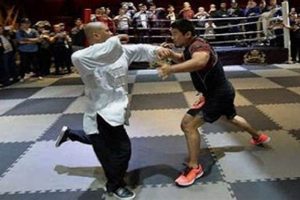
This striking-based combat sport blends the dynamic kicking techniques of kickboxing with the versatile grappling and striking elements found in mixed martial arts. A fighter proficient in this hybrid discipline will demonstrate powerful kicks and punches combined with takedowns, clinch work, and ground fighting. Imagine a fighter seamlessly transitioning from a powerful roundhouse kick to a double-leg takedown, followed by ground-and-pound this exemplifies the adaptable nature of this combat style.
The combined skill set offers a significant advantage in competitive fighting. It equips practitioners with a well-rounded approach, fostering adaptability and effectiveness against diverse opponents and fighting styles. Historically, the evolution of mixed martial arts has seen various striking disciplines, including kickboxing, become integral components, demonstrating its efficacy within a broader combat framework. This integration has contributed to the development of more comprehensive and dynamic fighting strategies.
This exploration will further delve into specific techniques, training methodologies, and the role of this hybrid discipline within the broader context of modern combat sports. Topics covered will include the development of effective striking combinations, defensive strategies against takedowns, and the integration of clinch fighting into a comprehensive game plan.
Tips for Effective Striking and Grappling Integration
This section offers practical guidance for developing a well-rounded skill set, blending effective striking with grappling proficiency.
Tip 1: Develop Strong Kickboxing Fundamentals: Mastering basic kicks (roundhouse, front kick, teep) and punches (jab, cross, hook, uppercut) provides a foundation for effective striking within this hybrid discipline. Consistent practice on pads and heavy bags builds power and accuracy.
Tip 2: Seamlessly Integrate Takedowns: Practice transitioning smoothly from striking to takedown attempts. Catching kicks or utilizing punches to set up takedowns creates opportunities to control the fight on the ground.
Tip 3: Prioritize Clinch Control: The clinch serves as a bridge between striking and grappling. Developing strong clinch control allows fighters to dictate the range and initiate takedowns or deliver knee and elbow strikes.
Tip 4: Enhance Ground Fighting Skills: Ground control and submissions are crucial aspects of this discipline. Regular grappling training, focusing on takedown defense, ground-and-pound, and submissions, ensures overall fighting proficiency.
Tip 5: Develop Effective Striking Combinations: Utilizing combinations of punches and kicks keeps opponents guessing and creates openings for takedowns. Practice transitioning from striking combinations to clinch work or takedown attempts.
Tip 6: Improve Footwork and Movement: Agility and footwork are essential for both striking and takedown defense. Regular drills focusing on lateral movement, pivoting, and changing angles enhance overall fighting effectiveness.
Tip 7: Emphasize Defensive Strategies: A strong defense is crucial against both strikes and takedowns. Practicing head movement, blocking, and sprawls ensures resilience and minimizes vulnerability.
By consistently applying these tips, practitioners can develop a comprehensive skill set, enabling them to adapt to various fighting scenarios and exploit opponent weaknesses effectively.
The subsequent conclusion will reiterate the importance of this blended fighting style in modern combat sports and provide further resources for continued training and development.
1. Striking Versatility

Striking versatility is a cornerstone of effective MMA kickboxing. Unlike traditional kickboxing, which primarily focuses on punches and kicks, this hybrid discipline demands a broader striking arsenal. This includes not only developing proficiency in punches, kicks, knees, and elbows but also understanding how to seamlessly integrate these strikes within the context of a mixed martial arts fight. The ability to transition fluidly between striking rangeslong range kicks, mid-range punches and knees, and close-range elbows and clinch workcreates unpredictability and allows fighters to exploit openings effectively. For example, a fighter might use a long-range teep kick to maintain distance, followed by a quick closing of the distance with a flurry of punches and a takedown attempt. This adaptability in striking is crucial for dictating the pace and flow of the fight.
The practical significance of striking versatility becomes evident in the dynamic nature of MMA competition. A fighter limited to a narrow range of strikes becomes predictable and vulnerable to counter-attacks. Conversely, a fighter who can seamlessly switch between different striking techniques, angles, and ranges keeps their opponent guessing and creates opportunities for both offensive and defensive maneuvers. Consider a fighter who uses a feigned takedown attempt to set up a devastating head kickthis exemplifies the strategic advantage offered by striking versatility. Moreover, the integration of clinch striking, utilizing knees and elbows, adds another layer of complexity and effectiveness to the overall striking game.
In summary, striking versatility is not merely a desirable attribute in MMA kickboxing; it’s a fundamental requirement for success. It empowers fighters to control the fight, exploit opponent weaknesses, and dictate the terms of engagement. Developing this versatility requires dedicated training, focusing not only on individual techniques but also on the seamless integration of these techniques within a comprehensive fighting system. This understanding is essential for anyone seeking to excel in the dynamic and demanding world of mixed martial arts competition. Further exploration of specific striking combinations and training drills will enhance the practical application of these concepts.
2. Takedown Integration

Takedown integration is a critical component differentiating MMA kickboxing from traditional stand-up kickboxing. It represents a fundamental shift in fighting strategy, moving beyond striking exchanges to incorporate grappling and ground control. Effective takedown integration allows fighters to dictate where the fight takes place, exploiting weaknesses in an opponent’s ground game or neutralizing a superior striker. This integration necessitates a deep understanding of takedown techniques, including single and double-leg takedowns, trips, and throws, as well as the ability to set up these takedowns from striking exchanges. For example, a fighter might use a jab to distract the opponent, followed by a swift level change and a penetration step for a double-leg takedown. The cause-and-effect relationship between striking and takedowns is a defining characteristic of this hybrid discipline.
The importance of takedown integration is further underscored by its practical applications in MMA competition. A fighter proficient in takedowns can control the pace and location of the fight, effectively neutralizing an opponent’s striking advantage. Consider a scenario where a fighter, facing a more skilled kickboxer, utilizes a well-timed takedown to bring the fight to the ground, subsequently employing ground-and-pound or seeking a submission. This tactical shift can dramatically alter the course of a fight. Moreover, successful takedowns score points in professional MMA bouts, demonstrating their strategic significance. The ability to defend against takedowns is equally crucial, preventing opponents from dictating the terms of engagement. This defensive aspect necessitates training in takedown defense, including sprawls, hip escapes, and underhooks.
In summary, takedown integration is not merely an additional skill set in MMA kickboxing; it’s a core element defining its strategic depth and complexity. Mastery of takedowns and takedown defense significantly impacts a fighter’s ability to control the fight, dictate the terms of engagement, and ultimately achieve victory. The seamless blending of striking and grappling is what distinguishes this hybrid discipline, offering a more comprehensive and adaptable approach to combat. This understanding is paramount for anyone seeking to compete effectively within the dynamic landscape of mixed martial arts. Further exploration of specific takedown techniques and defensive strategies will enhance practical application and contribute to a more nuanced understanding of this crucial element.
3. Clinch Fighting

Clinch fighting represents a crucial bridge between striking and grappling in MMA kickboxing. This in-fighting range, where fighters are in close proximity, offers unique opportunities for both offensive and defensive maneuvers. Understanding the nuances of clinch fighting is essential for success in this hybrid discipline, as it dictates control of the fight’s tempo and positioning.
- Control and Domination
The clinch allows fighters to exert control over their opponents, limiting their movement and striking options. Dominating the clinch often leads to advantageous positions for takedowns or strikes from the clinch. For example, securing a double collar tie can restrict head movement and set up knee strikes to the head or body. This control disrupts the opponent’s rhythm and creates opportunities for offensive maneuvers.
- Offensive Striking Opportunities
The clinch provides opportunities for devastating close-range strikes, primarily knees and elbows. These strikes, delivered with power and precision, can inflict significant damage and potentially finish a fight. Muay Thai, a key influence in MMA kickboxing, emphasizes the use of knee and elbow strikes from the clinch, highlighting their effectiveness in close-quarters combat. A well-placed knee to the body can debilitate an opponent, while a sharp elbow strike can cause cuts and create openings for further attacks.
- Takedown Setups and Defense
The clinch serves as a crucial transition point for takedowns. Many takedowns, such as trips and throws, are initiated from the clinch. Conversely, a strong clinch game can also be used defensively to prevent takedowns. Understanding how to utilize underhooks, overhooks, and body positioning is essential for both offensive and defensive clinch work. For instance, securing an underhook can create an angle for a takedown, while a strong overhook can prevent an opponent from securing a double leg.
- Transitioning Between Ranges
Clinch fighting is not an isolated element; it’s dynamically integrated with other aspects of MMA kickboxing. Fighters seamlessly transition between striking at distance, entering the clinch, and moving to the ground. This fluidity requires proficiency in controlling distance, recognizing openings, and adapting to the changing dynamics of the fight. For example, a fighter might use a combination of punches to close the distance, secure a clinch, and then transition to a takedown attempt. This adaptability is a hallmark of a well-rounded MMA kickboxer.
Mastery of clinch fighting is essential for success in MMA kickboxing. It’s a critical component that links striking and grappling, offering control, offensive opportunities, and defensive strategies. The ability to effectively utilize the clinch differentiates skilled fighters, allowing them to dictate the flow of the fight and exploit opponent weaknesses. A deep understanding of these multifaceted aspects enhances overall fighting proficiency and provides a strategic advantage in the dynamic arena of mixed martial arts competition.
4. Ground and Pound
Ground and pound represents a critical offensive component within MMA kickboxing, bridging the gap between takedowns and submissions. It involves establishing a dominant position on the ground, typically side control, mount, or knee-on-belly, and delivering strikes to the opponent. This offensive strategy serves multiple purposes, including softening the opponent for submission attempts, creating opportunities for positional advancements, and accumulating damage.
- Positional Dominance
Effective ground and pound necessitates establishing and maintaining dominant positions. This involves controlling the opponent’s hips and limbs, limiting their movement and ability to defend. Securing positions like side control or mount provides leverage and stability for delivering powerful strikes while minimizing the risk of reversals. The ability to transition smoothly between dominant positions further enhances offensive effectiveness.
- Striking from Dominant Positions
Delivering strikes from dominant positions is a key element of ground and pound. Punches, elbows, and hammerfists are common strikes utilized to inflict damage and wear down the opponent. Accuracy and power are crucial, as is the ability to adapt striking techniques based on the specific position and the opponent’s defensive posture. For example, short, powerful elbows are often effective from side control, while hammerfists can be devastating from the mount position.
- Creating Openings for Submissions
Ground and pound is not solely about inflicting damage; it also creates opportunities for submissions. By softening the opponent with strikes, fighters can create openings for chokes, joint locks, or other submission attempts. For instance, repeated strikes to the head can force an opponent to expose their neck, creating an opportunity for a guillotine choke. The interplay between striking and submissions is a hallmark of effective ground and pound.
- Posture and Defense
While offense is a primary focus, maintaining proper posture and defensive awareness is essential during ground and pound. This includes protecting oneself from the opponent’s attempts to escape, reverse positions, or secure submissions. A strong defensive posture minimizes vulnerability and allows for sustained offensive pressure. For example, keeping a tight base and maintaining proper head position can prevent sweeps and reversals.
Ground and pound exemplifies the integrated nature of MMA kickboxing, blending striking and grappling seamlessly. It provides a pathway to victory through both damage accumulation and submission opportunities, highlighting the importance of a well-rounded skill set in mixed martial arts competition. The effectiveness of ground and pound is directly tied to a fighter’s ability to establish and maintain dominant positions, deliver powerful and accurate strikes, and seamlessly transition between offensive and defensive maneuvers. This intricate interplay of techniques underscores the complexity and strategic depth of ground and pound within the broader context of MMA kickboxing.
5. Adaptability
Adaptability stands as a cornerstone of effective MMA kickboxing, distinguishing proficient fighters from those with limited skill sets. The dynamic nature of mixed martial arts demands constant adjustment and improvisation. A fighter rigidly adhering to a pre-determined plan becomes predictable and vulnerable. Conversely, a fighter capable of seamlessly transitioning between striking, clinch work, takedowns, and ground fighting holds a significant advantage. This adaptability stems from a deep understanding of each component discipline and the ability to integrate them fluidly. Consider a fighter initially engaging in a kickboxing exchange, then transitioning to a takedown attempt when sensing an opening, followed by ground-and-pound or a submission attemptthis fluidity exemplifies adaptability in action. The cause-and-effect relationship is clear: adaptability leads to greater control over the fight’s trajectory and increased opportunities to exploit opponent weaknesses. It also acts as a buffer against unexpected shifts in momentum, allowing fighters to maintain composure and adjust their strategy accordingly.
This adaptability manifests in several critical ways within a fight. Reacting effectively to an opponent’s changing tactics is paramount. If an opponent successfully defends against takedown attempts, the adaptable fighter seamlessly returns to striking, perhaps employing different combinations or angles of attack. Similarly, if a fighter finds themselves in a disadvantageous position on the ground, adaptability allows them to transition to a more defensive posture, create space, and potentially regain control. This dynamic adjustment distinguishes successful fighters, enabling them to capitalize on opportunities and mitigate risks in real-time. Examples abound in professional MMA, where fighters known for their adaptability have consistently overcome opponents with more specialized but less adaptable styles. This underscores the practical significance of adaptability as a defining characteristic of successful MMA kickboxing.
In summary, adaptability is not merely a desirable trait in MMA kickboxing; it’s a fundamental requirement for success. It represents the ability to seamlessly integrate diverse techniques, react effectively to changing circumstances, and exploit opponent vulnerabilities. This dynamic responsiveness distinguishes proficient fighters, granting them a distinct advantage in the unpredictable and demanding arena of mixed martial arts competition. The development of adaptability requires dedicated training across all facets of MMA, fostering a holistic understanding of the interplay between striking, grappling, and ground fighting. This integrated approach, emphasizing fluidity and responsiveness, lies at the heart of effective MMA kickboxing, paving the path towards sustained success in the sport.
6. Defensive Awareness

Defensive awareness forms a critical foundation in MMA kickboxing, representing the ability to anticipate and react effectively to opponent attacks. This heightened sense of awareness extends beyond simply blocking or evading strikes; it encompasses a comprehensive understanding of positioning, distance management, and opponent tendencies. Cause and effect are intricately linked: a lack of defensive awareness leads to increased vulnerability, while heightened awareness creates opportunities for counter-attacks and minimizes the risk of absorbing significant damage. This defensive acumen is not a passive element but an active and dynamic component of MMA kickboxing, influencing strategic decision-making and dictating the flow of the fight. Consider a fighter anticipating a takedown attempt and sprawling effectively, immediately transitioning to a dominant position this exemplifies the practical application of defensive awareness. A lapse in this awareness could have resulted in a takedown, placing the fighter in a disadvantageous position.
The practical significance of defensive awareness becomes even more pronounced when considering the multifaceted nature of MMA kickboxing. Fighters must defend against a wide array of attacks, including punches, kicks, takedowns, and submissions. This demands constant vigilance and the ability to adapt defensive strategies based on the opponent’s style and the evolving dynamics of the fight. For instance, a fighter facing a predominantly striking opponent will prioritize head movement and footwork to evade strikes, while against a grappler, the focus shifts to takedown defense and sprawling. Real-world examples abound, demonstrating how superior defensive awareness can be a decisive factor in MMA bouts. Fighters renowned for their defensive prowess often control the pace and flow of fights, minimizing damage while creating opportunities to capitalize on opponent mistakes. This reinforces the importance of defensive awareness as not merely a protective measure, but a strategic asset that directly contributes to victory.
In summary, defensive awareness is not simply a defensive skill; it’s a fundamental principle that permeates every aspect of MMA kickboxing. It’s a dynamic and evolving process of anticipating threats, reacting effectively, and creating opportunities. This heightened awareness minimizes vulnerability, maximizes offensive potential, and ultimately dictates success in the complex and demanding arena of mixed martial arts. Developing this awareness requires dedicated training, focused on reading opponent cues, refining defensive techniques, and integrating these skills seamlessly within the overall fighting system. A deep understanding of defensive awareness empowers fighters to control the fight’s narrative, mitigate risks, and capitalize on opportunities, ultimately paving the path towards victory.
Frequently Asked Questions
This section addresses common inquiries regarding the integration of kickboxing techniques within the broader framework of mixed martial arts.
Question 1: How does kickboxing training benefit mixed martial artists?
Kickboxing develops crucial striking skills, including powerful kicks and punches, enhancing offensive capabilities in stand-up exchanges. It also improves footwork, balance, and coordination, essential for overall fighting proficiency.
Question 2: What are the key differences between traditional kickboxing and its application in MMA?
Traditional kickboxing primarily focuses on stand-up striking. Its application within MMA necessitates adapting these techniques for integration with grappling, takedowns, and ground fighting. Defensive strategies must also account for takedown attempts and clinch work.
Question 3: Are there specific kickboxing techniques particularly effective in MMA?
Techniques like the push kick (teep), roundhouse kick to the legs and body, and sharp boxing combinations are often highly effective. Their efficacy depends on the fighter’s ability to integrate them seamlessly within a broader MMA strategy.
Question 4: How does one effectively integrate kickboxing techniques with grappling and ground fighting?
Effective integration requires dedicated training in both striking and grappling. Practicing transitions between striking, clinch work, takedowns, and ground fighting is crucial for developing fluidity and adaptability.
Question 5: What role does defensive awareness play in MMA kickboxing?
Defensive awareness is paramount. It involves not only blocking and evading strikes but also anticipating takedown attempts, maintaining proper distance, and recognizing opponent tendencies. This awareness minimizes vulnerability and creates opportunities for counter-attacks.
Question 6: How does training in MMA kickboxing differ from training in traditional kickboxing or other martial arts?
MMA kickboxing training incorporates a wider range of disciplines, including grappling, wrestling, and Brazilian Jiu-Jitsu. Training regimens typically involve sparring, drilling specific techniques, strength and conditioning, and flexibility exercises to develop a well-rounded skill set.
This FAQ section provides a concise overview of key considerations regarding kickboxing’s role in MMA. A comprehensive understanding of these elements further contributes to appreciating the complexity and strategic depth inherent in this hybrid martial art.
Further sections will delve into specific training methodologies, conditioning exercises, and strategic considerations for optimizing performance in MMA kickboxing.
Conclusion
This exploration has provided a comprehensive overview of the multifaceted nature of MMA kickboxing, highlighting its core principles and practical applications. The analysis encompassed key aspects, including striking versatility, takedown integration, clinch fighting, ground and pound, adaptability, and defensive awareness. Each element contributes significantly to a fighter’s overall effectiveness within the dynamic landscape of mixed martial arts competition. The examination underscored the importance of seamlessly integrating diverse techniques, fostering adaptability, and cultivating a heightened sense of defensive awareness. The interplay between these elements defines the strategic depth and complexity inherent in this hybrid discipline.
The evolution of combat sports continues to emphasize the importance of well-rounded skill sets. MMA kickboxing exemplifies this trend, offering a comprehensive fighting system that prepares practitioners for the diverse challenges encountered in modern competition. Continued exploration and refinement of these integrated techniques will undoubtedly shape the future of mixed martial arts, pushing the boundaries of combat sport performance and strategy. The dedication to mastering these multifaceted skills ultimately determines success within the demanding arena of professional fighting.