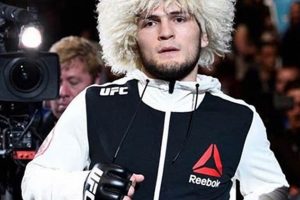
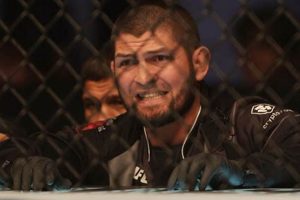
Khabib Nurmagomedov’s career within the Ultimate Fighting Championship (UFC) represents a dominant force in the lightweight division. His undefeated record, wrestling mastery, and relentless fighting style marked a distinct era in mixed martial arts. A significant example of his prowess is his victory over Conor McGregor at UFC 229, a highly publicized event that solidified his status as a global sports icon.
His influence extends beyond the octagon, impacting training methodologies and inspiring a new generation of fighters. His unwavering dedication to the sport, combined with his cultural background, contributed to his widespread popularity and cemented his legacy as one of the greatest fighters in the history of the sport. His retirement in 2020 left a significant void in the lightweight division, leaving a lasting impact on the landscape of mixed martial arts competition.
This exploration delves further into specific aspects of his career, including key fights, training regime, and overall impact on the sport. It will analyze his fighting techniques, examine his cultural significance, and discuss the legacy he leaves behind.
Training and Competition Tips Inspired by Khabib Nurmagomedov
These tips draw inspiration from the training and competition strategies employed by Khabib Nurmagomedov during his dominant reign in the UFC. They focus on developing a well-rounded skillset essential for success in mixed martial arts.
Tip 1: Master the Fundamentals of Wrestling: A strong wrestling base provides a significant advantage in controlling the pace and location of a fight. Emphasis should be placed on takedowns, ground control, and positional dominance.
Tip 2: Develop Relentless Cardiovascular Conditioning: Maintaining high-intensity output throughout a fight requires exceptional cardiovascular fitness. Training should incorporate intense drills and sparring sessions.
Tip 3: Incorporate Strength and Conditioning Specific to MMA: Strength training should focus on functional movements that translate directly to fighting, enhancing both power and explosiveness.
Tip 4: Prioritize Disciplined Dietary Practices: Proper nutrition fuels optimal performance and recovery. A balanced diet tailored to the demands of training is essential.
Tip 5: Cultivate Mental Fortitude and Focus: Mental strength is crucial for managing pressure and maintaining composure during competition. Techniques like meditation and visualization can be beneficial.
Tip 6: Refine Ground-and-Pound Techniques: Effective ground-and-pound creates opportunities for submissions and TKO victories. Regular drilling is crucial for developing precision and power.
Tip 7: Study and Analyze Opponents: Understanding an opponent’s strengths and weaknesses allows for the development of targeted strategies and maximizes the chances of victory.
By incorporating these principles into training regimens, athletes can cultivate a well-rounded approach to mixed martial arts, improving performance and increasing the likelihood of success. These elements represent core components of a successful training strategy.
This exploration concludes with a summary of key takeaways and a final perspective on the importance of continuous improvement in the pursuit of excellence in mixed martial arts.
1. Dominant Wrestler

Khabib Nurmagomedov’s dominance in the UFC stemmed directly from his exceptional wrestling abilities. His mastery of Sambo, a Russian martial art emphasizing grappling and takedowns, provided the foundation for his control over opponents in the octagon. He seamlessly transitioned from takedowns to dominant ground positions, neutralizing opponents’ striking abilities and dictating the flow of the fight. This wrestling proficiency formed the cornerstone of his undefeated record, allowing him to consistently impose his will on opponents regardless of their fighting styles. The fight against Abel Trujillo at UFC 160, where Nurmagomedov secured a record-breaking 21 takedowns, serves as a prime example of his wrestling dominance.
This wrestling-centric approach not only secured victories but also shaped the narrative surrounding his fighting style. Opponents knew they faced a formidable challenge in taking him down or escaping his ground control. This created both a psychological and strategic advantage, often forcing opponents to fight defensively and expend significant energy trying to avoid being taken to the ground. His victory over Conor McGregor, a predominantly striking-based fighter, clearly demonstrated the efficacy of this wrestling-focused strategy. McGregor, known for his powerful striking, was effectively neutralized by Nurmagomedov’s relentless takedowns and ground control, solidifying the importance of wrestling dominance in high-level MMA competition.
Understanding the crucial link between Nurmagomedov’s wrestling prowess and his overall UFC success provides valuable insights into the importance of a strong grappling base in mixed martial arts. It underscores the effectiveness of a wrestling-centric game plan, particularly in neutralizing opponents with diverse fighting styles. While striking and other martial arts disciplines remain important, Nurmagomedov’s career exemplifies the significant advantage offered by a dominant wrestling foundation, showcasing its practical significance in achieving sustained success within the octagon. His legacy serves as a compelling case study for aspiring fighters and underscores the importance of wrestling as a core element of a well-rounded MMA skillset.
2. Undefeated Record
Khabib Nurmagomedov’s undefeated record in the UFC stands as a testament to his exceptional skill and unwavering dedication. This unblemished professional record of 29 wins and 0 losses is a rare feat in the intensely competitive world of mixed martial arts, placing him among an elite group of fighters. Examining the factors contributing to this achievement provides valuable insights into his sustained dominance within the octagon.
- Dominant Wrestling Base
Nurmagomedov’s wrestling background provided a significant advantage, allowing him to control opponents and dictate the pace of fights. His ability to take opponents down and maintain dominant positions neutralized their striking and limited their offensive options. This consistent control, exemplified in his fights against Rafael dos Anjos and Gleison Tibau, contributed significantly to his unblemished record.
- Relentless Pressure and Pace
Nurmagomedov’s relentless pressure and high-output fighting style wore down opponents, both physically and mentally. His constant forward movement and aggressive grappling created a challenging environment for opponents to thrive, often forcing them into defensive postures and limiting their ability to mount effective offenses. This persistent pressure, evident in his victory over Al Iaquinta, played a key role in maintaining his undefeated streak.
- Strategic Fight Preparation and Adaptability
A hallmark of Nurmagomedov’s career is his meticulous preparation and ability to adapt his strategies mid-fight. His team’s in-depth analysis of opponents’ strengths and weaknesses allowed for targeted game plans, maximizing his chances of victory. His ability to adjust his approach based on the evolving dynamics of a fight, demonstrated in his bout against Dustin Poirier, further contributed to his unblemished record.
- Mental Fortitude and Championship Mindset
Beyond physical prowess, Nurmagomedov possessed unwavering mental fortitude and a championship mindset. His composure under pressure and unwavering belief in his abilities allowed him to overcome challenges and maintain focus throughout his career. This mental resilience, evident in his high-pressure fight against Conor McGregor, proved essential in preserving his undefeated record.
These interconnected factors, combined with exceptional talent and unwavering commitment, solidified Nurmagomedov’s place as one of the most dominant fighters in UFC history. His undefeated record serves as a lasting testament to his skill, dedication, and strategic brilliance within the octagon, setting a benchmark for future generations of mixed martial artists.
3. Lightweight Champion

Khabib Nurmagomedov’s legacy is intrinsically linked to his reign as UFC Lightweight Champion. This title represents the pinnacle of achievement in the 155-pound division, a weight class known for its depth of talent and fierce competition. Understanding the context of this championship reign provides crucial insights into Nurmagomedov’s impact on the sport.
- Dominant Reign
Nurmagomedov’s championship reign was characterized by dominant performances against top contenders. His victories over Conor McGregor, Dustin Poirier, and Justin Gaethje showcased his ability to control and finish elite opponents, solidifying his position as the undisputed champion. His grappling-heavy style proved incredibly effective, neutralizing the striking prowess of many challengers. This dominance underscored the effectiveness of his approach and cemented his place as a dominant force in the lightweight division.
- Title Defenses
Successfully defending a championship title multiple times against a variety of challenging opponents further solidifies a fighter’s legacy. Nurmagomedov’s three successful title defenses demonstrated his consistency and ability to adapt his strategies against different fighting styles. These defenses against top contenders validated his championship status and showcased his adaptability in high-pressure situations, solidifying his claim as one of the greatest lightweights.
- Impact on the Lightweight Division
Nurmagomedov’s presence significantly impacted the landscape of the lightweight division. His dominance raised the bar for other contenders, pushing them to refine their skills and develop strategies to counter his unique fighting style. This, in turn, elevated the overall level of competition within the division. His influence is evident in the evolving training methodologies and fight strategies employed by other lightweights, as they sought to adapt to the challenges he presented.
- Legacy of a Champion
A championship reign in the UFC, especially one as dominant as Nurmagomedov’s, cements a fighter’s place in the history of the sport. His undefeated record and commanding performances established him as a benchmark for future generations of lightweight fighters. His accomplishments serve as a source of inspiration and motivation, demonstrating the heights achievable through dedication, discipline, and a relentless pursuit of excellence. His legacy as a lightweight champion extends beyond his fighting career, inspiring athletes and fans worldwide.
Khabib Nurmagomedov’s time as UFC Lightweight Champion is a crucial component of his overall legacy. It represents not only his individual achievements but also his impact on the sport as a whole. His dominant reign, successful title defenses, and influence on the lightweight division solidified his position as one of the greatest fighters in UFC history, leaving an enduring mark on the sport and inspiring future generations of athletes.
4. Cultural Influence

Khabib Nurmagomedov’s influence transcends the realm of sports, significantly impacting global culture, particularly within the Muslim and Dagestani communities. His unwavering commitment to his faith and cultural heritage, combined with his athletic achievements, resonated deeply with audiences worldwide, fostering a sense of pride and representation. This cultural impact stems from several key factors.
His public expression of faith, including pre- and post-fight rituals, provided visibility for Islamic practices within a mainstream sporting context. This representation challenged stereotypes and offered a positive portrayal of Muslim athletes, inspiring many young Muslims who saw in him a role model who successfully integrated faith and athletic pursuits. Furthermore, his emphasis on family values and respect for elders resonated with traditional cultural values, reinforcing his image as a positive influence. His success served as a source of inspiration, particularly for youth in his native Dagestan, demonstrating the potential for achieving global recognition while staying true to one’s roots.
His global recognition elevated the profile of Dagestan, his home republic, bringing attention to its rich cultural heritage and martial arts traditions. This exposure fostered a sense of pride among Dagestanis and contributed to a growing interest in the region’s culture and sporting achievements. The increased visibility also translated into tangible benefits, including investments in sports infrastructure and youth development programs in Dagestan, inspired by Nurmagomedov’s success. His story underscores the profound impact an athlete can have on cultural identity and representation on a global scale. By embodying both athletic excellence and cultural pride, he created a powerful narrative that continues to inspire and motivate individuals across cultural and geographical boundaries.
5. Legacy of Dominance

Khabib Nurmagomedov’s legacy of dominance within the UFC extends beyond his undefeated record and championship reign. It encompasses his impact on the sport, his influence on aspiring fighters, and his cultural significance. This dominance stems from a combination of factors, including his unparalleled wrestling skills, relentless fighting style, and unwavering mental fortitude. Examining these facets provides a comprehensive understanding of his enduring impact on mixed martial arts.
- Unparalleled Wrestling Prowess
Nurmagomedov’s mastery of wrestling formed the foundation of his dominance. His ability to dictate the location and pace of fights, consistently taking opponents down and controlling them on the ground, neutralized their strengths and limited their offensive opportunities. This wrestling dominance, showcased in his victories over Conor McGregor and Rafael dos Anjos, set him apart from other fighters and established a blueprint for success in the lightweight division.
- Relentless Fighting Style and Mental Fortitude
Nurmagomedov’s relentless pressure and unwavering mental strength proved crucial to his success. His constant forward movement, combined with his ability to maintain composure under pressure, wore down opponents both physically and mentally. This relentless style, evident in his fights against Justin Gaethje and Dustin Poirier, created a challenging environment for opponents, forcing them into defensive postures and limiting their ability to mount effective offenses. This mental and physical dominance contributed significantly to his undefeated record.
- Impact on Training and Fighting Styles
Nurmagomedov’s success influenced training methodologies and fighting styles within the sport. His emphasis on wrestling and grappling, combined with his relentless pressure and cardiovascular conditioning, inspired a new generation of fighters to prioritize these aspects of their training. This impact is visible in the evolving strategies employed by other fighters, as they adapted to the challenges presented by his dominant style. His influence continues to shape the landscape of mixed martial arts, pushing fighters to refine their skills and develop new approaches to competition.
- Cultural Significance and Inspiration
Beyond his athletic achievements, Nurmagomedov’s cultural impact further solidified his legacy. His unwavering commitment to his faith and heritage, combined with his humility and respect for opponents, resonated with audiences worldwide. This cultural significance transcended the sport, inspiring individuals beyond the realm of mixed martial arts. His representation of Dagestani and Muslim communities, coupled with his emphasis on family values, created a positive image that resonated with diverse audiences, solidifying his status as a role model and cultural icon.
These interconnected elements contribute to a comprehensive understanding of Khabib Nurmagomedov’s enduring legacy of dominance. His impact extends beyond individual achievements, shaping the sport of mixed martial arts and inspiring future generations of athletes. His unwavering dedication, exceptional skill, and cultural significance solidify his place as one of the most influential figures in the history of the UFC.
Frequently Asked Questions about Khabib Nurmagomedov’s UFC Career
This section addresses common inquiries regarding Khabib Nurmagomedov’s career in the Ultimate Fighting Championship, providing concise and informative responses.
Question 1: What is Khabib Nurmagomedov’s professional fighting record?
Nurmagomedov boasts a remarkable undefeated professional record of 29 wins and 0 losses.
Question 2: What fighting style did Khabib Nurmagomedov primarily utilize in the UFC?
His fighting style is predominantly characterized by Sambo-influenced wrestling, emphasizing takedowns and ground control.
Question 3: Which weight class did Khabib Nurmagomedov compete in?
He competed in the UFC’s lightweight division (155 lbs).
Question 4: Against whom did Khabib Nurmagomedov have his most high-profile fight?
His most high-profile fight was against Conor McGregor at UFC 229, resulting in a victory for Nurmagomedov via submission.
Question 5: Why did Khabib Nurmagomedov retire from professional fighting?
He retired in 2020, citing a promise to his mother following the passing of his father and coach, Abdulmanap Nurmagomedov.
Question 6: What is Khabib Nurmagomedov’s current involvement in mixed martial arts?
While retired from professional fighting, Nurmagomedov remains involved in the sport through coaching, promoting his own organization (Eagle Fighting Championship), and mentoring up-and-coming fighters.
These responses offer a concise overview of key aspects of Nurmagomedov’s career. Further exploration of his training methods, fighting style, and cultural impact can provide a more comprehensive understanding of his significance within the sport.
The following section provides a deeper dive into specific aspects of his career and training regimen.
Khabib Nurmagomedov’s Enduring Impact on the UFC
Khabib Nurmagomedov’s UFC career represents a period of unprecedented dominance in the lightweight division. His undefeated record, combined with his distinctive wrestling-based fighting style, left an indelible mark on the sport. From his record-breaking takedowns to his high-profile victories, his performances consistently showcased exceptional skill and unwavering determination. His cultural influence, particularly within the Dagestani and Muslim communities, broadened the sport’s reach and inspired a new generation of athletes. His legacy extends beyond individual achievements, impacting training methodologies, raising the bar for competition, and solidifying his place as one of the greatest fighters in UFC history. His story exemplifies the power of dedication, discipline, and the pursuit of excellence in achieving lasting success.
The impact of Nurmagomedovs career continues to shape the landscape of mixed martial arts. His approach serves as a case study for aspiring fighters, underscoring the importance of a strong wrestling foundation, relentless training, and unwavering mental fortitude. The future of the sport will undoubtedly reflect the influence of his dominant reign, inspiring athletes to push boundaries and strive for new levels of achievement. His legacy challenges conventional wisdom, prompting ongoing analysis and adaptation of training methods, ultimately contributing to the continued evolution of mixed martial arts.