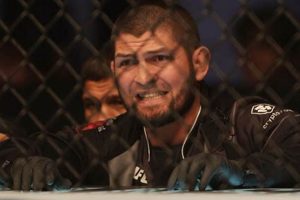
The pronunciation of the retired mixed martial artist’s name, often anglicized, involves distinct sounds. The first name, (Khabib), is pronounced with a guttural “kh” sound, similar to the “ch” in the Scottish word “loch,” followed by a short “a” as in “cat,” a “b” sound, and a long “ee” as in “see.” The surname, (Nurmagomedov), begins with an “n” sound, followed by “oo” as in “moon,” an “r,” “m,” a short “a” as in “cat,” “g,” “o” as in “go,” “m,” “eh” as in “bed,” “d,” “o” as in “go,” and finally, “v.”
Accurate pronunciation demonstrates respect for the individual and his Dagestani heritage. It also aids in clear communication and avoids misunderstandings when discussing the prominent figure in combat sports. His career and legacy have significantly impacted the world of mixed martial arts, and proper pronunciation reflects an understanding and appreciation of this influence. A deep dive into the phonetics can further enhance one’s appreciation of the cultural nuances associated with the name.
This understanding of the athlete’s name serves as a foundation for exploring various topics related to his life, career, and impact on the sport. From his dominant fighting style to his unwavering dedication and discipline, a multitude of areas are open for further examination.
Tips on Mastering the Pronunciation
Achieving accurate pronunciation requires attention to detail and consistent practice. The following tips provide guidance for mastering the nuances of the name.
Tip 1: Break Down the Name: Instead of attempting the entire name at once, focus on each syllable individually. Practice each partKhabib, then Nurmagomedovbefore combining them.
Tip 2: Emphasize the Guttural Sounds: The “kh” sound at the beginning of “Khabib” requires specific attention. Practice the sound by attempting to exhale forcefully while constricting the back of the throat.
Tip 3: Mind the Vowel Sounds: Pay close attention to the various vowel sounds. The “ee” in Khabib is long, while the “a” sounds are short. In Nurmagomedov, note the “oo,” “o,” and “eh” sounds.
Tip 4: Listen to Native Speakers: Utilize online resources featuring native speakers pronouncing the name. Repeated listening helps familiarize the ear with the correct pronunciation.
Tip 5: Record and Compare: Record yourself saying the name and compare it to recordings of native speakers. This allows for self-correction and identification of areas needing improvement.
Tip 6: Practice Regularly: Consistent practice is essential. Incorporate the name into regular conversations or practice sessions to solidify the correct pronunciation.
Tip 7: Seek Feedback: If possible, ask someone familiar with the correct pronunciation to provide feedback and guidance.
By diligently following these tips, one can achieve accurate and respectful pronunciation, demonstrating an appreciation for the individual’s heritage and legacy.
This detailed exploration of pronunciation provides a solid basis for a deeper understanding of the individual and his significance in the world of mixed martial arts. A further examination of his career and accomplishments will enrich this understanding.
1. Phonetic Breakdown

A phonetic breakdown provides a structured approach to pronouncing unfamiliar names, particularly those originating from different linguistic backgrounds. In the case of Khabib Nurmagomedov, understanding the individual sounds and their combinations is crucial for accurate pronunciation. This breakdown facilitates a systematic learning process, moving from individual sounds to complete syllables and ultimately, the entire name.
- Consonant Clusters:
The name contains several consonant clusters, such as “kh,” “rm,” and “gd.” These combinations can present challenges for non-native speakers. Deconstructing these clusters and practicing each consonant individually, followed by the combined sound, improves pronunciation accuracy. For instance, practicing the “kh” sound, similar to the “ch” in “loch,” separately before integrating it into “Khabib,” facilitates mastery.
- Vowel Sounds:
Accurate vowel pronunciation is equally important. The name includes a variety of vowel sounds, including short “a” sounds, a long “ee” sound, and the “oo” sound as in “moon.” Distinguishing between these sounds and practicing their articulation contributes to clarity and correct pronunciation. The difference between the “a” in “cat” and the “ee” in “see” significantly impacts the overall sound of the name.
- Syllabic Emphasis:
Understanding syllabic emphasis contributes to a natural and fluent pronunciation. While a precise breakdown of stress in Khabib Nurmagomedov requires linguistic expertise in the Avar language, recognizing the multi-syllabic nature of the name and avoiding flattening the intonation enhances clarity. This prevents the name from sounding monotone and aids comprehension.
- Connecting Sounds:
The phonetic breakdown also clarifies how sounds connect between syllables and within consonant clusters. Understanding these transitions, such as the connection between the “r” and “m” in “Nurmagomedov,” smooths pronunciation and avoids abrupt or unnatural breaks. This contributes to a more fluid and accurate rendition of the name.
By systematically addressing each of these phonetic components, pronunciation accuracy improves. This detailed analysis facilitates a deeper appreciation for the nuances of the name and contributes to respectful and clear communication when discussing the prominent figure in mixed martial arts. Mastering these components demonstrates cultural sensitivity and avoids mispronunciations that could be perceived as disrespectful.
2. Stress and Intonation

Stress and intonation play a crucial role in conveying meaning and ensuring accurate pronunciation, particularly with names like Khabib Nurmagomedov. While English often relies on stress to differentiate between words (e.g., “PREsent” vs. “preSENT”), languages like Avar, the language of Khabib Nurmagomedov’s native Dagestan, utilize complex intonation patterns. These patterns involve changes in pitch and tone that contribute significantly to the meaning and proper pronunciation of words. Therefore, while pinpointing the exact stress pattern for an English speaker requires linguistic expertise in Avar, understanding the general principles of stress and the role of intonation can improve pronunciation accuracy. Incorrect stress placement can lead to miscommunication or make the pronunciation sound unnatural, potentially causing offense.
For instance, misplacing the stress in “Nurmagomedov” could alter its perceived meaning within the Avar language context, even if subtly. While native English speakers might not detect these nuances, the importance lies in demonstrating respect for the name’s origin and proper pronunciation. Analogously, consider the difference in English between “record” (noun) and “record” (verb). The change in stress completely alters the word’s meaning. Though less dramatic in a cross-linguistic context like this, the principle remains. Resources like audio recordings of native Avar speakers can offer valuable guidance for approximating accurate stress and intonation, even without a deep understanding of the language’s structure. Focusing on mimicking the rise and fall of their speech patterns can significantly improve one’s pronunciation of the name.
In summary, while a precise replication of Avar stress and intonation patterns may be challenging for non-speakers, acknowledging their importance and striving for accurate pronunciation demonstrates respect and cultural sensitivity. Utilizing resources like audio recordings of native speakers, paying attention to the subtle shifts in pitch and tone, and recognizing the potential for miscommunication through incorrect stress contribute significantly to achieving a respectful and accurate pronunciation of Khabib Nurmagomedov. This detailed exploration of pronunciation provides a solid foundation for further analysis of the athlete’s impact and legacy within mixed martial arts.
3. Guttural "Kh" Sound

The guttural “kh” sound presents a significant phonetic challenge in pronouncing “Khabib Nurmagomedov” correctly. Mastering this sound is crucial for accurate pronunciation and demonstrates respect for the athlete’s Dagestani heritage. This sound, absent in many languages, distinguishes the name and adds to its unique character. The following facets explore the complexities of this sound and its relevance to the overall pronunciation.
- Articulation and Placement:
Producing the “kh” sound involves constricting the back of the throat while exhaling. This differs significantly from the standard “k” sound and requires specific vocal manipulation. Examples of similar sounds can be found in other languages, such as the “ch” in the Scottish word “loch” or the “j” in Spanish “jota.” Understanding the physical mechanics of producing this sound aids in accurate replication. Improper articulation can lead to mispronunciation and potentially unintentional misrepresentation of the name.
- Distinguishing from Similar Sounds:
The “kh” sound is often confused with the “k” or “h” sounds. However, it possesses distinct characteristics that set it apart. While the “k” is a sharper, more percussive sound, and the “h” is a simple breath, the “kh” combines elements of both, resulting in a harsher, more guttural sound. Mispronouncing the “kh” as a “k” or “h” alters the name’s authenticity and can convey a lack of understanding or respect for its origins. Recognizing these subtle differences is crucial for accurate pronunciation.
- Practice and Auditory Training:
Mastering the “kh” sound requires dedicated practice and auditory training. Listening to native speakers pronounce the name, focusing specifically on the “kh” sound, helps familiarize the ear with the correct articulation. Online resources, including audio and video recordings, offer valuable tools for practice. Repetition and careful attention to the nuances of the sound are key to successful mastery.
- Cultural Significance:
The “kh” sound, prevalent in many Caucasian languages, holds cultural significance. Its presence in “Khabib” connects the name to its linguistic roots and represents a distinct phonetic element of the region. Acknowledging this cultural context emphasizes the importance of accurate pronunciation and demonstrates respect for the athlete’s heritage. Mispronunciation can inadvertently convey a lack of cultural sensitivity.
Mastering the guttural “kh” sound is paramount to correctly pronouncing “Khabib Nurmagomedov.” It represents not only a phonetic challenge but also a crucial element of cultural respect and understanding. By dedicating time and effort to practicing and understanding the nuances of this sound, one demonstrates an appreciation for the name’s origins and the athlete’s heritage, enhancing communication and avoiding potential misinterpretations.
4. Vowel Pronunciation

Vowel pronunciation forms a cornerstone of accurately conveying the name “Khabib Nurmagomedov.” The name comprises a diverse range of vowel sounds, each contributing significantly to the overall pronunciation. Accuracy in vowel articulation differentiates the name from similar-sounding words and ensures clear communication, demonstrating respect for the individual’s heritage. Mispronunciation stemming from incorrect vowel sounds can lead to misunderstanding and potentially misrepresent the name’s origin and cultural context. For example, the “ee” sound in “Khabib,” similar to “see,” differs significantly from the short “i” sound in “sit.” Similarly, the “u” in “Nurmagomedov,” pronounced as “oo” like in “moon,” requires distinct articulation compared to a shorter “u” sound as in “cut.” These nuances, while subtle, significantly impact the overall pronunciation. Neglecting these distinctions can create a pronunciation that deviates significantly from the correct form, potentially leading to miscommunication or misidentification.
The importance of accurate vowel pronunciation extends beyond mere clarity. It reflects an understanding and appreciation of the linguistic nuances inherent in the name. Consider the “o” sounds in “Nurmagomedov.” These are not pronounced like the “o” in “hot” but rather like the “o” in “go.” Such distinctions, though seemingly minor, contribute to the overall authenticity and respectful pronunciation of the name. Furthermore, consistent practice of these vowel sounds, utilizing resources like audio recordings of native speakers, helps solidify accurate pronunciation. This dedication to accurate articulation demonstrates respect and avoids potential misinterpretations that could arise from mispronunciation.
Accurate vowel pronunciation, therefore, functions as a critical component in correctly saying “Khabib Nurmagomedov.” It ensures clear communication, avoids potential misinterpretations, and demonstrates respect for the individual’s heritage. Mastering these vowel sounds requires careful attention to detail, consistent practice, and a willingness to learn the nuances of pronunciation. This dedication to accurate pronunciation facilitates clear communication and demonstrates cultural sensitivity. It underscores the importance of respecting the individual’s background and identity, which transcends the mere mechanics of pronunciation.
5. Practice and Repetition

Mastery of accurate pronunciation, particularly for names like Khabib Nurmagomedov with unfamiliar phonetic elements, hinges significantly on practice and repetition. Consistent effort reinforces correct articulation and builds muscle memory for the complex sounds involved. This dedicated practice bridges the gap between theoretical understanding of phonetic principles and practical application, resulting in accurate and fluent pronunciation.
- Targeted Repetition of Challenging Sounds:
Isolating and repeatedly practicing the more challenging sounds, such as the guttural “kh” or the specific vowel combinations, builds proficiency. Similar to learning a musical instrument, focused repetition strengthens the relevant muscles involved in producing these sounds, eventually leading to automatic and accurate articulation. For instance, dedicating specific practice sessions to the “kh” sound, independent of the rest of the name, reinforces its proper production.
- Incorporation into Regular Conversation:
Integrating the name into daily conversations, even in casual contexts, normalizes the pronunciation and reinforces accuracy. Regular use reduces the cognitive load associated with recalling and producing the unfamiliar sounds, promoting fluency and natural-sounding speech. This consistent exposure, akin to practicing vocabulary in a new language, facilitates effortless pronunciation over time.
- Utilizing Audio and Visual Aids:
Leveraging audio recordings of native speakers and videos demonstrating correct articulation provides valuable feedback and guidance. Comparing one’s pronunciation to these resources highlights areas for improvement and reinforces correct techniques. This auditory and visual feedback loop, similar to using a metronome for musical practice, refines accuracy and timing.
- Seeking Feedback and Correction:
Soliciting feedback from individuals familiar with the correct pronunciation offers valuable external evaluation. Constructive criticism identifies areas requiring further attention and accelerates the learning process. This external perspective, analogous to receiving coaching in athletics, provides insights that self-assessment may overlook.
Consistent practice and repetition serve as the foundation for mastering the pronunciation of Khabib Nurmagomedov. These techniques transform theoretical knowledge of phonetics into practical skill, fostering accurate, respectful, and fluent articulation. This dedication to accurate pronunciation ultimately demonstrates respect for the individual’s heritage and ensures clear communication.
Frequently Asked Questions
This FAQ section addresses common inquiries and misconceptions regarding the pronunciation of Khabib Nurmagomedov’s name, providing clarity and guidance for accurate articulation.
Question 1: Why is accurate pronunciation important?
Accurate pronunciation demonstrates respect for the individual’s Dagestani heritage and promotes clear communication. Mispronunciation can be perceived as disrespectful or create confusion.
Question 2: What is the most common mispronunciation?
Replacing the guttural “kh” sound with a standard “k” or “h” sound represents the most frequent error. Additionally, mispronouncing the vowels, particularly the “oo” and “eh” sounds, contributes to mispronunciation.
Question 3: Are there resources available to help with pronunciation?
Numerous online resources, including audio and video recordings of native speakers, offer valuable pronunciation guidance. These resources provide auditory examples and visual demonstrations for effective learning.
Question 4: How does one master the guttural “kh” sound?
Mastering the “kh” sound requires practice and attention to throat placement. Attempting to exhale forcefully while constricting the back of the throat produces a similar sound. Consulting resources that detail the articulation of similar sounds in other languages can also be beneficial.
Question 5: Does the stress placement significantly affect pronunciation?
While precise stress placement requires understanding the nuances of the Avar language, awareness of the multi-syllabic nature of the name and avoiding monotone delivery improves clarity. Mimicking the intonation patterns of native speakers can further enhance accuracy.
Question 6: How long does it typically take to learn the correct pronunciation?
The learning curve varies depending on individual linguistic abilities and the amount of dedicated practice. Consistent effort, coupled with the utilization of available resources, accelerates the learning process. Even a basic understanding of the phonetic principles significantly improves pronunciation.
Accurate pronunciation requires dedicated effort but demonstrates respect and facilitates clear communication. Utilizing the resources and insights provided in this FAQ section empowers individuals to confidently and respectfully pronounce Khabib Nurmagomedov’s name.
This comprehensive guide to pronunciation serves as a springboard for deeper exploration of the athlete’s career, achievements, and legacy in the world of mixed martial arts. The following sections will delve into these aspects, providing a comprehensive overview of his impact on the sport.
Conclusion
Accurate pronunciation of Khabib Nurmagomedov’s name necessitates understanding specific phonetic elements, including the guttural “kh” sound, distinct vowel pronunciations, and the influence of stress and intonation. Systematic practice, utilizing resources such as audio recordings of native speakers and phonetic breakdowns, aids in mastering these elements. This dedication to accurate articulation reflects respect for the athlete’s Dagestani heritage and facilitates clear communication within the context of mixed martial arts discourse.
The effort invested in proper pronunciation transcends mere linguistic accuracy; it signifies an appreciation for cultural nuance and individual identity. This principle extends beyond the specific case of Khabib Nurmagomedov, serving as a reminder of the importance of respectful communication in an increasingly interconnected global community. Further exploration of his career and contributions to mixed martial arts should be grounded in this understanding, ensuring that discussions of his legacy are informed by both accurate pronunciation and respectful acknowledgment of his cultural background.