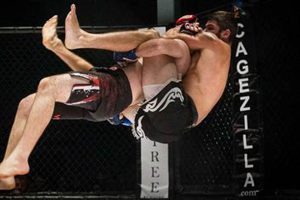
A fractured tibia or fibula, the bones of the lower leg, sustained by a mixed martial arts competitor during competition or training is a severe injury. Such fractures can range from hairline cracks to complete breaks, often involving displacement of the bone fragments. An example would be a fighter checking a kick, resulting in a spiral fracture of the tibia.
Understanding lower leg fractures in mixed martial arts is crucial for several reasons. These injuries can have significant impacts on fighter health and career longevity. They can necessitate lengthy rehabilitation periods, potentially involving surgery and impacting future performance. Historically, the development of shin guards and improved training methodologies has aimed to mitigate such risks. Moreover, analyzing the mechanics of these injuries contributes to refining safety protocols and preventive measures within the sport.
This article will further explore the causes, consequences, and prevention of such injuries in mixed martial arts, including a detailed look at rehabilitation processes and the impact on fighter careers.
Preventing Lower Leg Fractures in MMA
Minimizing the risk of tibial and fibular fractures is paramount for athlete safety and career longevity in mixed martial arts. The following recommendations offer practical guidance for injury prevention:
Tip 1: Proper Conditioning: Consistent strength and conditioning programs targeting the lower leg musculature are crucial. Exercises like calf raises, tibialis anterior strengthening, and plyometrics can improve bone density and enhance the muscles’ ability to absorb impact.
Tip 2: Effective Technique: Correct execution of techniques, particularly checking kicks and landing from jumps, is vital. Training should emphasize proper form and weight distribution to reduce stress on the lower leg bones.
Tip 3: Appropriate Protective Gear: Utilizing well-maintained and properly fitted shin guards during sparring and training can offer a layer of protection against impacts. Regularly inspecting and replacing worn gear is essential.
Tip 4: Progressive Training Load: Gradually increasing training intensity and volume allows the bones and supporting tissues to adapt to stress over time. Avoiding sudden increases in training load can reduce the risk of overuse injuries.
Tip 5: Adequate Recovery: Rest and recovery are essential for tissue repair and growth. Overtraining can weaken bones and increase susceptibility to fractures. Adequate sleep, nutrition, and active recovery modalities should be prioritized.
Tip 6: Medical Consultation: Regular check-ups with medical professionals, including sports physicians and physical therapists, can identify potential risk factors and address any existing weaknesses or imbalances.
Tip 7: Controlled Sparring: Sparring sessions should be supervised and controlled, with appropriate intensity levels based on individual experience and skill. Overly aggressive or uncontrolled sparring increases the risk of accidental injuries.
Adhering to these preventative measures can significantly reduce the incidence of lower leg fractures in mixed martial arts, contributing to a safer and more sustainable training environment.
By prioritizing injury prevention, athletes and coaches can foster a culture of safety within mixed martial arts, promoting long-term athletic development and career longevity.
1. Causes

Understanding the causes of lower leg fractures in mixed martial arts is crucial for developing effective preventative strategies. These injuries typically result from high-impact forces exceeding the bone’s capacity to withstand stress. Common mechanisms include checked kicks, where the tibia or fibula absorbs the full force of a strike, and awkward landings from throws or jumps, potentially leading to torsional or compressive fractures. Improper technique during training or competition can also increase the risk, as can pre-existing conditions like stress fractures or bone density issues. For example, a fighter failing to adequately check a low kick can result in a direct impact to the tibia, potentially causing a fracture. Similarly, an awkward landing from a takedown can place excessive rotational force on the lower leg, leading to a spiral fracture.
Further contributing factors include inadequate conditioning, insufficient rest and recovery, and the use of inappropriate or worn-out protective gear. Overtraining can weaken bones and increase susceptibility to fractures, while poorly maintained equipment offers inadequate protection from impacts. The intensity and frequency of training also play a role; repetitive stress without sufficient recovery time can lead to stress fractures that may progress to complete breaks. Consider a fighter consistently training with fatigued muscles and inadequate rest. This scenario increases the likelihood of technical errors and diminishes the body’s capacity to repair microdamage, potentially contributing to a significant fracture.
Identifying the specific causes of lower leg fractures in individual cases allows for targeted interventions. This understanding facilitates the development of training regimens focused on strengthening vulnerable areas, improving technique, and ensuring adequate recovery. Furthermore, it highlights the importance of appropriate protective equipment and responsible training practices. Analyzing the biomechanics of these injuries also contributes to the ongoing evolution of safety protocols within the sport. By addressing these causal factors, the incidence of such devastating injuries can be reduced, safeguarding athlete health and career longevity.
2. Consequences

Lower leg fractures in mixed martial arts carry significant consequences, impacting athletes both physically and professionally. The immediate aftermath of such an injury involves intense pain, swelling, and an inability to bear weight. The severity of the fracture dictates the extent of these initial effects. A simple, non-displaced fracture may result in localized pain and limited mobility, while a compound fracture, involving bone protruding through the skin, presents more severe and immediate complications. The location of the break also influences the immediate consequences. A fracture near the knee joint can compromise stability and affect range of motion, while a break lower down the tibia or fibula may primarily impact weight-bearing capacity. These initial consequences necessitate immediate medical attention, often involving temporary splinting or immobilization to stabilize the injured limb and prevent further damage.
Long-term consequences of lower leg fractures can range from minor discomfort to career-altering complications. The healing process itself requires a significant time investment, often involving immobilization for several weeks followed by an extensive rehabilitation period. This extended absence from training and competition can negatively impact an athlete’s conditioning, skill development, and overall career progression. Even after healing, complications such as chronic pain, decreased range of motion, and arthritis can persist, affecting long-term athletic performance. The psychological impact of such injuries should also be considered. The experience of a severe injury, coupled with the uncertainty of a full recovery, can lead to anxiety, depression, and fear of re-injury, impacting both physical and mental well-being. Consider a fighter returning to competition after a tibial fracture. Even with successful physical rehabilitation, the psychological impact of the injury might persist, affecting confidence and performance. This underscores the importance of psychological support alongside physical therapy during the recovery process.
Understanding the potential consequences of lower leg fractures reinforces the critical importance of preventative measures in mixed martial arts. Implementing strategies to minimize the risk of these injuries benefits not only individual athletes but also the sport as a whole. From promoting proper training techniques and conditioning programs to ensuring the use of adequate protective gear, proactive measures are essential for safeguarding athlete health and career longevity. The long-term impact of these injuries extends beyond the individual athlete, influencing training methodologies, safety protocols, and the overall evolution of the sport. By acknowledging and addressing the potential consequences, mixed martial arts can continue to evolve as a safer and more sustainable athletic pursuit.
3. Prevention

Preventing lower leg fractures in mixed martial arts is paramount for athlete safety and career longevity. This proactive approach emphasizes mitigating risk factors through targeted strategies, fostering a safer training and competitive environment. Implementing preventative measures reduces the incidence of these debilitating injuries, contributing to the overall well-being and sustained performance of mixed martial arts athletes.
- Strength and Conditioning
Targeted strength and conditioning programs play a crucial role in injury prevention. Strengthening the muscles surrounding the tibia and fibula, such as the calf muscles and tibialis anterior, enhances their ability to absorb impact and protect the bones. Plyometric exercises improve dynamic strength and power, further reducing the risk of fractures during explosive movements. For example, consistent calf raises and tibialis anterior strengthening can improve bone density and enhance the lower leg’s resilience to impact forces. Incorporating these exercises into training regimens strengthens the supporting structures, mitigating the risk of fractures.
- Technical Proficiency
Correct technique is essential for minimizing stress on the lower leg bones. Proper execution of techniques, particularly checking kicks and landing from jumps, distributes forces more effectively, reducing the risk of fractures. Training should emphasize proper foot placement, weight distribution, and controlled movements. For instance, learning to effectively check a low kick by aligning the tibia and fibula to absorb the impact can prevent direct force to vulnerable areas. Similarly, practicing safe landing techniques after jumps or throws minimizes the risk of awkward landings that can lead to fractures. Refining technical skills reduces the likelihood of placing excessive stress on the lower leg bones.
- Protective Equipment
Well-maintained and properly fitted shin guards offer an additional layer of protection during training and competition. Regularly inspecting and replacing worn-out gear ensures optimal impact absorption. Shin guards specifically designed for mixed martial arts provide targeted protection to the tibia and fibula, reducing the risk of fractures from direct impacts. For example, using high-quality shin guards during sparring sessions can significantly reduce the force transmitted to the lower leg bones. Ensuring a proper fit prevents slippage during movement, maintaining consistent protection. Utilizing appropriate protective equipment creates a barrier against impacts, minimizing the risk of fractures.
- Recovery and Rest
Adequate rest and recovery are essential for tissue repair and growth, reducing the risk of overuse injuries. Overtraining weakens bones and increases susceptibility to fractures. Prioritizing sleep, nutrition, and active recovery modalities allows the body to repair microdamage and strengthen bones. For example, incorporating rest days into training schedules allows the lower leg muscles and bones to recover from stress. Proper nutrition provides the necessary building blocks for tissue repair and growth. Active recovery methods, such as foam rolling and stretching, promote blood flow and flexibility, further enhancing recovery. Prioritizing rest and recovery optimizes bone health and reduces the risk of stress fractures.
These interconnected facets of prevention collectively contribute to minimizing the risk of lower leg fractures in mixed martial arts. By integrating strength and conditioning, technical proficiency, protective equipment, and recovery strategies, athletes and coaches can create a safer training environment and promote long-term athletic development. Prioritizing preventative measures protects athlete health and reduces the incidence of these devastating injuries, fostering a more sustainable and successful future for mixed martial arts.
4. Treatment

Treatment for a lower leg fracture in a mixed martial arts fighter depends on the severity and type of fracture, ranging from non-surgical interventions for minor fractures to complex surgical procedures for severe breaks. Prompt and appropriate treatment is crucial for ensuring proper healing, minimizing complications, and facilitating a safe return to training and competition. The chosen treatment approach significantly impacts the athlete’s recovery timeline and long-term prognosis.
- Non-Surgical Intervention
Non-surgical treatment is typically reserved for stable fractures without significant displacement. This approach involves immobilization with a cast, splint, or brace to stabilize the fracture and promote bone healing. The duration of immobilization varies depending on the fracture’s severity, typically lasting several weeks. Regular medical evaluations monitor the healing process. For example, a hairline fracture of the fibula might require a walking boot for four to six weeks, allowing the bone to heal naturally while maintaining some mobility. This non-invasive approach minimizes surgical risks but necessitates strict adherence to immobilization protocols for optimal healing.
- Surgical Intervention
Surgical intervention is often necessary for complex fractures, such as those involving significant displacement, comminution (bone fragmentation), or open wounds. Surgical procedures aim to realign and stabilize the fractured bone fragments, promoting proper healing and restoring anatomical integrity. Techniques may include open reduction and internal fixation (ORIF), where bone fragments are surgically realigned and secured with plates, screws, or rods. Intramedullary nailing may be used for certain tibial fractures, involving inserting a rod into the bone’s marrow cavity. For instance, a displaced tibial fracture might require ORIF to precisely realign the bone fragments and stabilize them with a plate and screws. Surgical intervention facilitates faster healing and allows for earlier mobilization in some cases, but carries inherent surgical risks.
- Pain Management
Effective pain management is crucial throughout the treatment process. Immediately following the injury, ice, elevation, and immobilization help control pain and swelling. Oral or intravenous pain medications may be prescribed to manage discomfort. As healing progresses, pain management strategies transition to managing discomfort during rehabilitation. This may involve over-the-counter pain relievers, physical therapy modalities such as heat or ultrasound, and alternative therapies like acupuncture. Managing pain allows for greater participation in rehabilitation exercises and improves overall comfort during recovery.
- Rehabilitation
Rehabilitation plays a vital role in restoring function and strength after a lower leg fracture. Once the bone has sufficiently healed, a structured rehabilitation program begins, focusing on regaining range of motion, strength, and stability. Physical therapy exercises gradually progress from gentle range-of-motion activities to weight-bearing exercises and functional training. This process may involve modalities such as ultrasound, electrical stimulation, and manual therapy techniques to promote tissue healing and reduce pain. Rehabilitation is essential for regaining full athletic function and minimizing the risk of re-injury. The duration and intensity of rehabilitation vary based on the severity of the fracture and the individual’s healing progress. Returning to pre-injury activity levels too quickly can compromise healing and increase the risk of complications, highlighting the importance of adhering to a structured rehabilitation plan.
The comprehensive treatment of lower leg fractures in mixed martial arts fighters requires a multidisciplinary approach involving medical professionals, physical therapists, and strength and conditioning coaches. The specific treatment plan is tailored to the individual’s injury and overall health status. Adhering to the prescribed treatment protocol and engaging diligently in rehabilitation are essential for achieving optimal outcomes and facilitating a safe return to competition. The ultimate goal of treatment is not only to heal the fracture but also to restore full function, minimize long-term complications, and empower the athlete to resume training and competition at their pre-injury level. Successfully navigating this complex process requires a collaborative effort between the athlete and the medical team, prioritizing long-term health and career longevity over immediate returns.
5. Recovery

Recovery from a lower leg fracture in mixed martial arts constitutes a complex and multifaceted process, significantly influencing an athlete’s ability to resume training and competition. This process extends beyond simply healing the fractured bone; it encompasses regaining strength, flexibility, range of motion, and psychological readiness. The recovery period’s duration and complexity correlate directly with the fracture’s severity and the individual’s physiological response. A simple, non-displaced fracture typically heals faster than a comminuted or open fracture, requiring less extensive rehabilitation. For example, a fighter with a clean break of the fibula might return to training sooner than one with a tibial fracture requiring surgical intervention. Factors such as age, overall health, and adherence to rehabilitation protocols also influence recovery timelines and outcomes. Effective recovery hinges on a multidisciplinary approach involving medical professionals, physical therapists, and strength and conditioning coaches working collaboratively to address the physical and psychological aspects of healing.
Rehabilitation typically begins after a period of immobilization, focusing initially on restoring range of motion and reducing swelling. Progressive weight-bearing exercises are gradually introduced as the bone heals, strengthening the surrounding musculature and improving joint stability. Physical therapy modalities, such as ultrasound and electrical stimulation, can aid tissue healing and pain management. Functional exercises specific to mixed martial arts, including kicking, punching, and grappling drills, are integrated as the athlete progresses, facilitating a safe return to sport-specific training. Consider a fighter recovering from a tibial fracture. Initial rehabilitation might involve gentle range-of-motion exercises and non-weight-bearing activities. As healing progresses, weight-bearing exercises and functional training are introduced, culminating in sport-specific drills to prepare for competition. This gradual progression allows the bone and surrounding tissues to adapt to increasing loads, minimizing the risk of re-injury.
Successful recovery requires not only physical healing but also addressing the psychological impact of the injury. Athletes may experience anxiety, fear of re-injury, and frustration during the recovery process. Psychological support and counseling can prove invaluable in managing these emotional challenges and facilitating a positive mindset. Integrating psychological support with physical rehabilitation enhances the overall recovery process, promoting a holistic return to competition. The recovery period presents an opportunity for athletes to focus on other aspects of their training, such as improving nutrition, refining technique, and developing mental fortitude. By addressing the physical and psychological components of recovery, athletes can emerge from this challenging experience stronger and more resilient. Understanding the multifaceted nature of recovery from lower leg fractures in mixed martial arts is crucial for athletes, coaches, and medical professionals alike. This understanding fosters realistic expectations, informed decision-making, and ultimately, a safe and successful return to competition.
Frequently Asked Questions
This section addresses common inquiries regarding lower leg fractures in mixed martial arts, providing concise and informative responses.
Question 1: How long does it typically take for a fighter to recover from a lower leg fracture?
Recovery timelines vary significantly depending on the fracture’s severity and type. Simple fractures may heal within a few months, while complex fractures requiring surgery can necessitate six months or more of recovery and rehabilitation. Individual healing rates also play a role.
Question 2: What are the long-term risks associated with these injuries?
Potential long-term complications include chronic pain, arthritis, reduced range of motion, and decreased bone density. These risks are influenced by factors such as fracture severity, treatment efficacy, and individual predisposition.
Question 3: Can a fighter return to pre-injury performance levels after such a fracture?
Many fighters successfully return to competition after lower leg fractures. However, regaining pre-injury performance levels depends on various factors including the nature of the injury, rehabilitation adherence, and individual resilience. Some athletes may experience long-term performance limitations.
Question 4: What are the most effective preventative measures?
Comprehensive prevention strategies involve targeted strength and conditioning programs, proper technique training, appropriate protective gear, adequate rest and recovery, and regular medical consultation. These integrated measures contribute to minimizing fracture risk.
Question 5: What are the typical signs and symptoms of a lower leg fracture?
Common indicators include immediate and severe pain, swelling, deformity, inability to bear weight, and audible cracking or popping sounds at the time of injury. Prompt medical evaluation is essential for accurate diagnosis and appropriate treatment.
Question 6: What role does nutrition play in recovery?
Proper nutrition is crucial for supporting bone healing and overall recovery. Adequate intake of calcium, vitamin D, protein, and other essential nutrients facilitates tissue repair and strengthens bone density. Nutritional guidance from a qualified professional can optimize the recovery process.
Understanding these aspects of lower leg fractures in mixed martial arts is crucial for athletes, coaches, and medical professionals. Prioritizing injury prevention and implementing comprehensive treatment and rehabilitation strategies contribute to athlete safety and career longevity.
The following sections delve further into specific cases, advanced treatment modalities, and emerging research related to these injuries in mixed martial arts.
Conclusion
Lower extremity fractures represent a severe risk in mixed martial arts, carrying significant implications for athlete well-being and career trajectory. This exploration has examined the multifaceted nature of these injuries, encompassing causes, consequences, preventative strategies, treatment modalities, and recovery processes. From the impact forces involved in checked kicks to the long-term implications of chronic pain and reduced mobility, the analysis underscores the gravity of tibial and fibular fractures within the sport. The crucial roles of strength and conditioning, technical proficiency, protective equipment, and comprehensive medical care have been highlighted as integral components of risk mitigation and optimal recovery.
Continued research and advancements in sports medicine are essential for refining preventative measures, optimizing treatment protocols, and enhancing rehabilitation strategies. Promoting a culture of safety within mixed martial arts, prioritizing injury prevention, and fostering informed decision-making among athletes, coaches, and medical professionals are paramount. The pursuit of excellence in mixed martial arts must prioritize athlete health and long-term well-being, recognizing that minimizing the risk of devastating injuries like lower extremity fractures is fundamental to the sport’s sustainable future. Ongoing dedication to enhancing safety protocols and promoting responsible training practices will shape a more secure and prosperous future for mixed martial arts athletes.