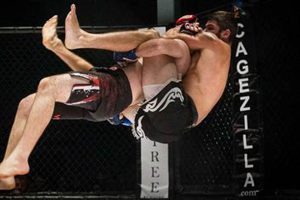
Quinton “Rampage” Jackson is a prominent figure in mixed martial arts. His aggressive fighting style, highlighted by powerful slams and striking, earned him the moniker “Rampage.” He gained notoriety in Japan’s PRIDE Fighting Championships before transitioning to the Ultimate Fighting Championship (UFC), where he became the Light Heavyweight Champion. His career is marked by memorable bouts against renowned fighters and a distinct, crowd-pleasing persona.
Jackson’s impact on the sport extends beyond his achievements. He brought a raw intensity and charismatic personality to the cage, attracting a wider audience to mixed martial arts. His iconic image and fighting style have influenced a generation of fighters. His career arc, from early Japanese promotions to championship glory, showcases the global evolution of MMA.
This exploration of his career will delve into key fights, defining moments, and lasting legacy. It will analyze his fighting techniques, explore the impact of his personality on the sport, and consider his place within the broader history of mixed martial arts.
Training Tips Inspired by Quinton “Rampage” Jackson
These training insights draw inspiration from elements observed in Quinton “Rampage” Jackson’s approach to mixed martial arts. They are intended for informational purposes and should be adapted to individual training regimens under the guidance of qualified professionals.
Tip 1: Explosive Power Development: Focus on exercises that build explosive power, such as plyometrics, Olympic lifts, and medicine ball throws. Power is crucial for generating impactful slams and strikes, a hallmark of Jackson’s style.
Tip 2: Wrestling Fundamentals: A strong wrestling base is essential. Develop proficiency in takedowns, takedown defense, and ground control to dictate where the fight takes place.
Tip 3: Aggressive Ground-and-Pound: Hone the ability to deliver powerful strikes from dominant ground positions. This requires effective posture control and precise striking technique.
Tip 4: Mental Fortitude: Cultivate an aggressive mindset and unwavering confidence. Mental strength is crucial for maintaining composure under pressure and delivering optimal performance.
Tip 5: Strategic Conditioning: Tailor conditioning programs to the specific demands of MMA. Focus on both strength and endurance to maintain power and effectiveness throughout a bout.
Tip 6: Defensive Awareness: Develop strong defensive skills, including head movement, blocking, and footwork. Defensive proficiency is essential for mitigating damage and creating offensive opportunities.
Tip 7: Controlled Aggression: While aggression is a valuable asset, it must be tempered with control and strategy. Learn to channel aggression effectively to avoid reckless mistakes.
By incorporating these training principles, individuals can develop a well-rounded skillset that emphasizes explosive power, aggressive techniques, and mental resilience. These elements are crucial for success in mixed martial arts competition.
These training tips provide a foundation for understanding the key elements that contribute to success in mixed martial arts, reflecting aspects of Jackson’s fighting style.
1. Power

Power, a defining characteristic of Quinton “Rampage” Jackson’s fighting style, significantly contributed to his success in mixed martial arts. Understanding its multifaceted nature provides insight into his effectiveness and impact on the sport.
- Physical Power:
Jackson possessed exceptional physical strength and explosiveness. This translated into devastating knockout power in his strikes and impactful slams, often overwhelming opponents. His physical power was a key factor in his ability to finish fights decisively.
- Mental Power:
Beyond physical attributes, Jackson displayed mental fortitude. His aggressive mindset and unwavering confidence allowed him to maintain composure under pressure and dictate the pace of fights. This mental strength was crucial for overcoming adversity and capitalizing on opportunities.
- Power of Charisma:
Jackson’s charisma and distinct personality resonated with audiences. This “power of personality” contributed to his popularity and drew attention to the sport. His iconic howl and engaging interviews further solidified his image as a captivating figure in MMA.
- Power of Legacy:
Jackson’s career achievements and fighting style left a lasting impact on the sport. He influenced a generation of fighters and helped shape the landscape of modern MMA. His legacy continues to inspire athletes and contribute to the evolution of fighting techniques.
These facets of power, intertwined and mutually reinforcing, contributed to Jackson’s success and enduring influence on mixed martial arts. His career exemplifies how physical prowess, mental fortitude, and charismatic personality can converge to create a powerful force within the sport.
2. Aggression

Aggression was a cornerstone of Quinton “Rampage” Jackson’s fighting style, a crucial element that shaped his career and contributed significantly to his success. His aggressive approach wasn’t merely reckless abandon; it was a calculated and often strategic component of his overall fight game. It manifested in several ways, from his relentless forward pressure and powerful striking exchanges to his explosive takedowns and dominant ground-and-pound. This consistent aggression forced opponents to fight defensively, disrupting their game plans and creating opportunities for Jackson to capitalize.
Examples of Jackson’s strategic aggression are abundant throughout his career. His fights against Chuck Liddell, Wanderlei Silva, and Dan Henderson showcased his ability to use aggression to dictate the pace and flow of the bout. Against Liddell, his aggressive striking and forward pressure ultimately led to a knockout victory. In his battles with Silva, Jackson’s aggressive takedowns and ground-and-pound proved effective in neutralizing Silva’s striking prowess. These instances demonstrate how Jackson harnessed aggression not as a singular tactic but as an integral element of a broader, adaptable strategy.
Understanding the role of aggression in Jackson’s fighting style provides valuable insight into his success and influence. It underscores the importance of controlled aggression in mixed martial arts, highlighting how it can be utilized to disrupt opponents, create openings, and dictate the terms of engagement. While aggression alone doesn’t guarantee victory, its effective implementation, as demonstrated by Jackson, can be a decisive factor in achieving success at the highest levels of competition. It is important to note that while Jackson was known for his aggression, he also demonstrated the ability to adapt and adjust his strategy based on the opponent and the circumstances of the fight. This adaptability further solidified his status as a formidable and well-rounded competitor.
3. Slams

Quinton “Rampage” Jackson’s association with powerful slams is a defining characteristic of his fighting style. Analyzing this technique reveals its strategic significance and contribution to his overall success in mixed martial arts. Slams represent not just a display of raw strength, but a tactical maneuver with the potential to shift momentum and inflict significant damage.
- Impact and Damage:
Slams generate significant impact force, capable of causing immediate injury or accumulating damage over time. The sudden deceleration and jarring impact can disrupt an opponent’s balance, breathing, and overall fighting rhythm. Notable examples include Jackson’s slams against Ricardo Arona and Kevin Randleman, where the impact clearly altered the course of the fights.
- Intimidation and Control:
The sheer force and visual spectacle of a slam can have a psychological impact on opponents. It establishes dominance and can create a sense of apprehension, influencing their subsequent actions and potentially making them more hesitant to engage in grappling exchanges. This intimidation factor played a role in many of Jackson’s fights, setting the tone for aggressive follow-up attacks.
- Setup and Transition:
Slams are rarely isolated techniques. They often arise from specific grappling exchanges, requiring skillful setup and execution. Jackson’s wrestling background provided the foundation for securing advantageous positions and transitioning seamlessly into slams. His ability to capitalize on opponent mistakes or create openings through feints and misdirection made his slams even more effective.
- Strategic Importance:
Slams serve a crucial strategic purpose within Jackson’s overall fighting approach. They can be used to create separation, punish aggressive takedown attempts, or transition to dominant ground positions. By incorporating slams strategically, Jackson could disrupt opponents’ game plans and dictate the flow of the fight. His victory over Matt Lindland exemplifies how a well-timed slam can lead to a decisive finish.
The analysis of slams within the context of Jackson’s fighting style reveals their multi-faceted importance. They were not merely displays of athleticism, but calculated maneuvers that combined power, technique, and strategy to devastating effect. The impact, intimidation factor, setup, and strategic implications of his slams contributed significantly to his success and cemented his reputation as a formidable force in mixed martial arts.
4. Wrestling
Wrestling formed the bedrock of Quinton “Rampage” Jackson’s success in mixed martial arts. His background in collegiate wrestling provided a crucial foundation, shaping his fighting style and contributing significantly to his victories. Wrestling’s influence manifested in several key areas, including takedown offense and defense, control in the clinch, and ground positioning. These skills enabled Jackson to dictate where the fight took place, neutralizing opponents’ strengths and capitalizing on his own advantages. For instance, against strikers like Chuck Liddell, Jackson’s takedowns were instrumental in neutralizing Liddell’s striking power and bringing the fight to the ground, where Jackson could utilize his ground-and-pound. Conversely, against grapplers like Ricardo Arona, Jackson’s strong takedown defense prevented Arona from implementing his submission-based game plan.
The importance of Jackson’s wrestling expertise extends beyond individual techniques. It provided a framework for controlling the overall flow and tempo of the fight. His ability to dictate the terms of engagement, whether through aggressive takedowns or effective takedown defense, disrupted opponents’ strategies and allowed Jackson to impose his own preferred fighting style. This control, rooted in his wrestling foundation, was evident in his victories over high-level competitors like Dan Henderson and Matt Lindland, demonstrating the practical significance of wrestling proficiency in high-stakes MMA competition.
In summary, wrestling served as the cornerstone of Jackson’s MMA prowess. It provided not just a set of techniques but a strategic advantage, enabling him to control opponents, dictate the pace of fights, and ultimately achieve victory. His career highlights the critical role of wrestling in mixed martial arts, demonstrating its practical application and effectiveness against diverse fighting styles. While other elements like striking and submissions contribute to a fighter’s overall skillset, Jackson’s success underscores the enduring importance of a strong wrestling base in achieving and maintaining dominance in the sport.
5. PRIDE FC

PRIDE Fighting Championships (PRIDE FC) holds a significant place in Quinton “Rampage” Jackson’s career and the broader landscape of mixed martial arts. This Japanese promotion served as a crucial stepping stone in Jackson’s rise to prominence, showcasing his distinct fighting style and contributing to his development as a fighter. Understanding PRIDE FC’s influence on Jackson provides valuable context for appreciating his impact on the sport.
- Development of Fighting Style:
PRIDE FC’s ruleset and competitive environment played a crucial role in shaping Jackson’s aggressive, slam-heavy fighting style. The promotion’s allowance of knees to the head of a grounded opponent and emphasis on finishes encouraged Jackson to develop his powerful ground-and-pound and devastating slams. His bouts against fighters like Kazushi Sakuraba and Igor Vovchanchyn showcased the evolution of his skills within the PRIDE FC arena.
- Exposure and International Recognition:
Competing in PRIDE FC provided Jackson with significant international exposure, establishing him as a recognized figure in the global MMA scene. The promotion’s popularity in Japan and international broadcasts brought Jackson’s unique personality and fighting style to a wider audience, laying the groundwork for his future success in the UFC.
- Rivalries and Defining Moments:
PRIDE FC was the stage for some of Jackson’s most memorable rivalries and defining career moments. His battles with Wanderlei Silva, in particular, became legendary, showcasing the intensity and excitement that characterized PRIDE FC. These fights contributed significantly to Jackson’s reputation as a fierce competitor and solidified his place in MMA history.
- Transition to the UFC:
Jackson’s success in PRIDE FC served as a springboard for his transition to the Ultimate Fighting Championship (UFC). His established reputation and proven fighting ability made him a highly sought-after acquisition for the UFC, where he would eventually capture the light heavyweight championship. PRIDE FC served as a crucial stepping stone in his journey to becoming a UFC champion.
PRIDE FC’s influence on Jackson’s career is undeniable. It provided the platform for him to hone his skills, gain international recognition, and engage in iconic battles that shaped his legacy. His time in PRIDE FC represents a pivotal chapter in his story, contributing significantly to his overall success and lasting impact on mixed martial arts. The experience gained and the reputation built within PRIDE FC’s unique environment proved invaluable in his subsequent achievements in the UFC and cemented his place as a prominent figure in the sport’s history.
6. UFC Champion

The title of UFC Champion holds significant weight in the career of Quinton “Rampage” Jackson, representing a pinnacle of achievement and solidifying his legacy within the sport of mixed martial arts. This achievement was not merely a title but a testament to his skill, determination, and the culmination of years of dedication to honing his craft. Examining the context surrounding this accomplishment provides a deeper understanding of its significance for Jackson and its impact on his career trajectory.
- Culmination of Skill and Perseverance:
Becoming UFC Light Heavyweight Champion signified the culmination of years of training and competition. It validated Jackson’s aggressive fighting style, built upon a foundation of wrestling, explosive power, and relentless forward pressure. His victory over Chuck Liddell at UFC 71, where he knocked out the reigning champion in the first round, stands as a testament to his honed skills and unwavering determination.
- Validation of Fighting Style:
The championship victory affirmed the effectiveness of Jackson’s unique and often unorthodox approach to fighting. His blend of powerful slams, aggressive ground-and-pound, and surprising agility proved a potent combination against some of the best fighters in the world. Winning the title validated his methods and cemented his place among the elite of the sport.
- Elevated Status and Recognition:
Achieving UFC Champion status elevated Jackson’s profile within the sport and brought him wider recognition. The title conferred not only prestige but also increased media attention, sponsorship opportunities, and a larger fanbase. This elevated status further solidified his influence within the MMA community and beyond.
- Impact on Legacy and Career Trajectory:
The UFC Championship undoubtedly shaped Jackson’s legacy and influenced his subsequent career path. It cemented his place in MMA history and opened doors to new opportunities, including high-profile fights and a continued presence within the sport even after his competitive career. The title remains a defining moment in his narrative, a testament to his accomplishments and lasting impact.
The UFC Championship represents a pivotal moment in Quinton “Rampage” Jackson’s career. It signifies not only the peak of his competitive achievements but also the validation of his distinct fighting style and the lasting impact he made on the sport. The title solidifies his legacy as a formidable competitor and influential figure in mixed martial arts, a testament to his dedication, skill, and unwavering pursuit of victory. His journey to becoming a champion, and the subsequent chapters of his career, continue to inspire and resonate within the MMA community.
7. Charisma
Charisma played a significant role in Quinton “Rampage” Jackson’s success as a mixed martial artist. While his aggressive fighting style and impressive record undoubtedly contributed to his popularity, his distinct personality further amplified his appeal and cemented his status as a fan favorite. This charisma manifested in several key ways, including his distinctive pre-fight howl, engaging trash talk, and candid, often humorous interviews. These elements combined to create a compelling persona that resonated with audiences and distinguished him from other fighters. For instance, his post-fight interviews, often filled with quotable lines and genuine emotion, further endeared him to fans and contributed to his marketability.
The impact of Jackson’s charisma extended beyond mere entertainment value. It played a crucial role in building his brand, attracting sponsors, and generating interest in his fights. This ability to connect with audiences translated into increased pay-per-view buys and merchandise sales, solidifying his position as a valuable asset within the sport. Furthermore, his charismatic personality helped elevate the profile of mixed martial arts as a whole, attracting new fans and contributing to its growing mainstream acceptance. His rivalry with Wanderlei Silva, fueled by their intense pre-fight exchanges and contrasting personalities, exemplifies how charisma can amplify a sporting narrative and generate significant interest.
In conclusion, charisma proved to be an essential ingredient in Quinton “Rampage” Jackson’s success. While his fighting abilities laid the foundation, his engaging personality amplified his appeal and solidified his status as a prominent figure in mixed martial arts. This analysis highlights the practical significance of charisma in combat sports, demonstrating its impact on fighter marketability, fan engagement, and the overall growth of the sport. It underscores the importance of personality and self-expression in building a successful career, even within a physically demanding and competitive field like mixed martial arts. The case of “Rampage” Jackson provides a compelling example of how charisma can complement athletic prowess and contribute to a lasting legacy within the sport.
Frequently Asked Questions about Quinton “Rampage” Jackson
This FAQ section addresses common inquiries regarding Quinton “Rampage” Jackson’s career, fighting style, and impact on mixed martial arts. The information provided aims to offer a comprehensive overview and clarify potential misconceptions.
Question 1: What is the origin of the nickname “Rampage”?
The nickname originated from Jackson’s aggressive, explosive fighting style, reminiscent of a rampage. His tendency to overwhelm opponents with powerful slams and relentless striking further solidified the moniker’s appropriateness.
Question 2: What are considered Quinton “Rampage” Jackson’s most significant victories?
Victories over Chuck Liddell for the UFC Light Heavyweight Championship, and his wins against Ricardo Arona and Wanderlei Silva (twice) in PRIDE FC are often cited as pivotal moments in his career. Each victory showcased different aspects of his skillset and solidified his position as a top-tier fighter.
Question 3: How significant was Jackson’s wrestling background to his MMA success?
His wrestling background provided a crucial foundation for his MMA career. It enabled him to control opponents, dictate where the fight took place, and effectively utilize ground-and-pound techniques. This wrestling base was instrumental in his victories over both strikers and grapplers.
Question 4: What impact did PRIDE FC have on Jackson’s fighting style?
PRIDE FC’s ruleset, which allowed knees to the head of a grounded opponent, contributed to the development of Jackson’s aggressive ground-and-pound and signature slams. The promotion’s emphasis on finishes further encouraged his relentless and explosive fighting style.
Question 5: How did Jackson’s personality contribute to his success?
His charismatic personality, evident in his pre-fight howl, engaging trash talk, and candid interviews, significantly enhanced his popularity and marketability. This connection with audiences broadened his appeal and solidified his status as a fan favorite.
Question 6: What is Quinton “Rampage” Jackson’s legacy in mixed martial arts?
Jackson’s legacy rests on his achievements as a UFC Champion, his memorable fights in PRIDE FC, and his influence on a generation of fighters. His aggressive fighting style and charismatic personality left a lasting impact on the sport, contributing to its growth and evolution.
This FAQ section provides a concise overview of key aspects of Quinton “Rampage” Jackson’s career and impact. Further research and exploration can provide a more comprehensive understanding of his contributions to mixed martial arts.
This concludes the FAQ section. The following sections will explore additional topics related to Quinton “Rampage” Jackson and his career.
Conclusion
This exploration of Quinton “Rampage” Jackson’s career has highlighted the multifaceted nature of his impact on mixed martial arts. From his aggressive fighting style, characterized by powerful slams and relentless ground-and-pound, to his charismatic personality and memorable rivalries, Jackson’s presence has left an undeniable mark on the sport. His journey through PRIDE FC and culminating in a UFC Championship reign showcases both the evolution of his skills and the global growth of MMA. His influence extends beyond individual achievements, shaping the landscape of the sport and inspiring future generations of fighters.
Jackson’s legacy serves as a reminder of the dynamic interplay between athleticism, personality, and strategic prowess in achieving lasting success in mixed martial arts. His story encourages further examination of the evolving dynamics within the sport and the diverse paths taken by its most influential figures. The impact of “Rampage” continues to resonate, prompting reflection on the qualities that define greatness within the dynamic and ever-evolving world of MMA.