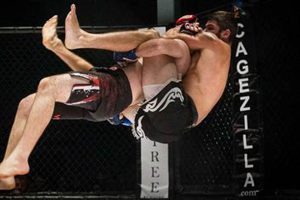
Unregulated combat outside the confines of sanctioned mixed martial arts (MMA) competition, often termed “street fighting,” presents a complex and dangerous scenario. It lacks the structured rules, safety precautions, and trained referees characteristic of professional MMA. For example, a spontaneous altercation incorporating elements of striking and grappling, without agreed-upon limitations, exemplifies this type of confrontation.
Understanding the distinction between sport and unregulated combat is crucial. While MMA competition emphasizes skill, discipline, and sportsmanship within a controlled environment, street fighting carries significant risks, including serious injury or legal repercussions. The absence of protective gear, medical oversight, and pre-fight assessments increases the potential for severe consequences. Historically, combat forms have existed outside of formal structures, but the modern context of legal frameworks and established combat sports necessitates a clear differentiation.
This exploration will delve into the various aspects surrounding unregulated combat, including its potential dangers, the legal ramifications, self-defense considerations, and the importance of seeking professional training in established martial arts disciplines.
Survival Strategies in Unregulated Altercations
Navigating a physical confrontation outside the controlled environment of a sanctioned bout requires careful consideration and strategic thinking. The following recommendations emphasize avoidance and de-escalation, but also offer guidance should physical engagement become unavoidable.
Tip 1: Prioritize Avoidance: The most effective strategy is to avoid confrontation altogether. Recognize potential triggers and actively seek to de-escalate tense situations through verbal communication and disengagement.
Tip 2: Seek Escape Routes: Continuously assess surroundings for potential escape routes. If a physical altercation appears imminent, creating distance and seeking a safe exit should be the primary objective.
Tip 3: Protect Vulnerable Areas: If physical engagement becomes unavoidable, prioritize protecting vital areas such as the head, neck, and groin. Defensive postures and blocking techniques can mitigate potential damage.
Tip 4: Utilize Basic Self-Defense Techniques: Familiarity with basic self-defense maneuvers, such as palm strikes, knee strikes, and basic grappling escapes, can provide an advantage in a volatile situation.
Tip 5: Seek Legal Assistance: In the aftermath of any physical altercation, seeking legal counsel is crucial. Understanding legal rights and responsibilities can help navigate potential legal complexities.
Tip 6: Formal Training is Essential: While these tips offer basic guidance, they are no substitute for formal training in a recognized martial art. Consistent training under qualified instructors builds essential skills, discipline, and controlled responses.
These strategies emphasize the importance of avoiding and de-escalating potentially dangerous situations. Developing physical and mental preparedness through structured training remains the most effective approach to personal safety.
By understanding the complexities and potential consequences of unregulated combat, individuals can make informed decisions that prioritize safety and well-being. The subsequent sections will explore further critical aspects of self-preservation and responsible decision-making.
1. Legality

Engaging in unsanctioned combat, often referred to as “street fighting,” carries significant legal ramifications. Regardless of the techniques employed, whether derived from mixed martial arts or other disciplines, such altercations fall outside the purview of regulated competition and are subject to legal scrutiny. The legal framework surrounding self-defense is nuanced and varies by jurisdiction. While claiming self-defense is possible, the burden of proof often rests on the individual to demonstrate that the force used was proportionate to the threat faced. Exceeding reasonable force can lead to charges ranging from assault and battery to more serious offenses like aggravated assault or manslaughter. For example, utilizing advanced MMA techniques like a rear-naked choke in response to a shove could be deemed excessive force and result in legal consequences.
The absence of a regulated environment, such as that found in sanctioned MMA competitions, removes the protections and legal allowances afforded to competitors within established rules. Consent, a cornerstone of organized fighting, is absent in street altercations. This lack of consent transforms a physical exchange, even one involving trained MMA practitioners, into a potential criminal act. Furthermore, pre-existing conditions or unforeseen vulnerabilities of an opponent can further complicate the legal landscape if serious injury or fatality occurs. A seemingly minor strike could have unintended, severe consequences if the recipient has an undiagnosed medical condition, escalating the legal repercussions for the individual who initiated the force.
Understanding the legal boundaries surrounding physical altercations is paramount. The application of MMA techniques outside a sanctioned environment carries inherent legal risks. Seeking professional legal counsel is crucial for navigating the complexities of self-defense law and understanding the potential consequences of engaging in unregulated combat. Prioritizing de-escalation, avoidance, and adherence to legal boundaries remains the most prudent course of action.
2. Safety

Safety is critically compromised in unregulated combat scenarios involving mixed martial arts techniques outside sanctioned environments. Unlike professional MMA bouts, street fights lack the stringent safety regulations and medical oversight crucial for minimizing risk. The absence of referees, pre-fight medical checks, and protective gear significantly elevates the potential for severe and unpredictable injuries. A seemingly controlled application of an MMA technique, such as a takedown, could result in unintended head trauma on concrete or asphalt, leading to significant injury or even fatality. The unpredictable nature of street environments, which may include uneven surfaces, obstacles, and the involvement of multiple individuals, further exacerbates the safety risks.
The inherent dangers are magnified by the absence of formally agreed-upon rules. In sanctioned MMA competitions, specific techniques are prohibited to reduce the risk of catastrophic injury. However, in a street fight, these constraints are absent, increasing the likelihood of serious harm. For example, a prohibited technique like a soccer kick to the head of a downed opponent could be employed, with potentially devastating consequences. Moreover, the emotional volatility and adrenaline surge often present in unregulated confrontations can escalate the intensity and unpredictability of actions, leading to escalated violence and heightened risk of injury for all involved.
The absence of safety protocols in street fights involving MMA techniques underscores the critical importance of avoiding such situations. The potential for severe, life-altering injuries or fatalities highlights the need for conflict resolution strategies and an understanding of the legal implications of engaging in unregulated combat. The pursuit of formal training within a reputable MMA gym, with an emphasis on controlled sparring and respect for safety guidelines, offers a far safer and more productive avenue for developing martial arts skills than engaging in risky, unsanctioned altercations.
3. Ethics

Ethical considerations surrounding unregulated combat involving mixed martial arts techniques outside sanctioned environments are paramount. Applying skills honed within the disciplined and regulated context of MMA in a street fight presents a complex ethical dilemma. The inherent power disparity between a trained fighter and an untrained individual raises serious questions about the responsible use of force. Utilizing superior fighting skills in a situation lacking the oversight and rules of a sanctioned bout can quickly escalate a confrontation, leading to disproportionate harm and potential legal consequences. Consider the scenario of a trained MMA fighter encountering an aggressive but unskilled individual. While self-defense remains a legitimate concern, escalating the situation by applying advanced fighting techniques could be ethically questionable and legally problematic. The trained individual has a responsibility to de-escalate whenever possible, recognizing the potential for severe injury to the untrained opponent.
Furthermore, the absence of mutual consent, a foundational principle of ethical combat, distinguishes a street fight from a sanctioned MMA match. In a sanctioned bout, both participants willingly engage under agreed-upon rules and with the understanding of potential risks. This mutual consent is absent in a street altercation, raising ethical concerns about fairness and the potential for exploitation of superior skills. Even if physically provoked, resorting to advanced techniques against an untrained individual could be considered ethically questionable, exceeding the boundaries of reasonable self-defense. This ethical dilemma highlights the importance of responsible decision-making and the potential consequences of applying trained fighting skills outside the confines of regulated competition.
Ultimately, ethical conduct in such scenarios necessitates prioritizing de-escalation, restraint, and a commitment to minimizing harm. Recognizing the potential for escalating violence and the inherent power imbalance underscores the importance of responsible behavior for trained fighters. Ethical considerations should always guide actions, emphasizing the importance of avoiding unnecessary conflict and utilizing skills responsibly when self-defense becomes unavoidable. The ethical implications of applying MMA skills outside a sanctioned environment demand careful reflection and a commitment to responsible conduct. This understanding contributes to fostering a culture of respect and minimizing the potential for harm in real-world confrontations.
4. Consequences

Engaging in unregulated combat, often referred to as “street fighting,” even with a background in mixed martial arts, carries a wide range of serious consequences. These repercussions extend beyond the immediate physical altercation and can significantly impact various aspects of an individual’s life. The severity of these consequences often correlates directly with the intensity of the fight and the resulting injuries inflicted. A minor altercation might result in relatively minor legal repercussions, such as a misdemeanor assault charge, while a severe beating could lead to felony charges, extensive jail time, and permanent criminal records. Consider a scenario where an individual trained in MMA utilizes a chokehold during a street fight, unintentionally causing serious injury or even death. The legal consequences in such a case could be devastating, even if the individual claims self-defense.
Beyond legal ramifications, the physical consequences can be equally severe. Unlike sanctioned MMA bouts with medical professionals present, street fights offer no such safeguards. Injuries sustained in these unregulated environments can range from broken bones and concussions to permanent disabilities or even fatalities. Lack of immediate medical attention can exacerbate these injuries, leading to long-term health complications. Furthermore, participation in such altercations can lead to psychological trauma, impacting mental well-being and requiring ongoing therapy. Reputational damage is another significant consequence. Involvement in street fights, regardless of the outcome, can tarnish an individual’s reputation, impacting professional and personal relationships. An individual with a known history of street fighting may face difficulty securing employment, maintaining social connections, or even accessing certain services.
In summary, the consequences of engaging in street fights, even with MMA training, are multifaceted and potentially life-altering. Legal repercussions, physical injuries, psychological trauma, and reputational damage are all significant factors to consider. Understanding the gravity of these potential consequences underscores the importance of avoiding unregulated combat and prioritizing conflict resolution strategies. The potential for severe and lasting repercussions emphasizes the need for responsible decision-making and the pursuit of safer avenues for utilizing martial arts skills, such as training within a regulated and supervised environment.
5. Unpredictability

Unpredictability is a defining characteristic of unregulated combat outside sanctioned mixed martial arts (MMA) competitions. Unlike the controlled environment of a sanctioned bout, street fights are inherently chaotic and unpredictable, introducing a significant layer of risk. This unpredictability stems from several factors, making these confrontations far more dangerous than organized fights.
- Environmental Factors
Street fights can occur in any location, from uneven pavement to crowded bars, introducing unpredictable environmental hazards. Unlike the predictable, flat surface of an MMA ring, a street fight might involve obstacles, uneven terrain, or even the presence of bystanders. These unpredictable elements dramatically increase the risk of accidental injuries, such as falls, collisions, or unintended impacts with surrounding objects. A simple takedown, a standard maneuver in MMA, could have devastating consequences if executed on concrete or near a staircase.
- Number of Participants
Unlike one-on-one sanctioned bouts, street fights can quickly escalate to involve multiple participants. The presence of friends or bystanders can transform a one-on-one altercation into a chaotic melee, significantly increasing the danger level. The unpredictability of who might intervene and how adds a significant layer of complexity and risk. An individual trained in MMA might find themselves facing multiple opponents simultaneously, a scenario rarely encountered in formal training.
- Weapon Involvement
The potential for weapon involvement distinguishes street fights from sanctioned MMA competitions. The presence of knives, firearms, or improvised weapons introduces a level of danger absent in regulated bouts. This unpredictability drastically alters the dynamics of the confrontation, shifting the focus from skill and technique to immediate survival. Even a highly skilled MMA fighter can be quickly overwhelmed by an opponent armed with a weapon.
- Opponent’s Skill Level
In contrast to the carefully matched opponents in professional MMA, street fights offer no guarantee of parity in skill or training. A trained individual might face an opponent with no formal training, a substantial size advantage, or even hidden skills in other combat disciplines. This unpredictability makes assessing the situation and applying appropriate force extremely challenging. Overestimating or underestimating an opponent’s capabilities can have serious consequences.
These elements of unpredictability inherent in street fights underscore the heightened danger compared to sanctioned MMA competitions. The uncontrolled environment, potential for multiple opponents or weapon involvement, and the unknown skill level of adversaries create a volatile and unpredictable mix. This reinforces the importance of avoiding such confrontations and prioritizing de-escalation strategies whenever possible. Training in MMA provides valuable self-defense skills, but responsible practitioners understand the critical distinction between the controlled environment of the gym and the unpredictable chaos of a street fight.
6. Self-preservation
Self-preservation, the inherent drive to protect oneself from harm, becomes a critical factor in the dangerous context of unregulated combat outside sanctioned mixed martial arts (MMA) competition, often termed “street fighting.” While MMA training can equip individuals with valuable self-defense skills, the chaotic and unpredictable nature of street fights necessitates a nuanced understanding of self-preservation beyond simply applying learned techniques. Effective self-preservation in such scenarios prioritizes avoiding confrontation altogether. Recognizing potential threats, de-escalating tense situations through verbal communication, and strategically retreating are crucial components of self-preservation. For instance, even a skilled MMA practitioner might choose to avoid a confrontation with multiple aggressors or an individual wielding a weapon, recognizing that engaging physically would compromise their safety despite their training.
However, when physical confrontation becomes unavoidable, self-preservation requires a shift in mindset from sporting competition to survival. The controlled environment of the MMA gym gives way to the unpredictable chaos of a street fight, where rules and safety precautions are absent. Self-preservation in this context demands rapid assessment of the situation, including the environment, the number of opponents, and the potential presence of weapons. Protecting vital areas, utilizing basic self-defense techniques, and creating distance to escape become paramount. For example, prioritizing head protection and employing simple, effective strikes while seeking an escape route might prove more effective than attempting complex MMA maneuvers in a confined, unpredictable environment. Furthermore, the legal ramifications of using excessive force in self-defense necessitate a measured response proportional to the immediate threat.
In conclusion, self-preservation in the context of “fight mma street” requires a multifaceted approach that extends beyond the application of learned fighting techniques. Prioritizing avoidance, de-escalation, and strategic retreat are crucial first steps. When physical confrontation is unavoidable, self-preservation necessitates a survival-focused mindset, emphasizing situational awareness, protection of vital areas, and a measured response proportionate to the threat. Understanding these principles is essential for anyone seeking to utilize MMA training for self-defense outside the controlled environment of sanctioned competition. The practical application of self-preservation principles in such dangerous and unpredictable scenarios can be the determining factor between escaping unharmed and facing severe consequences. This understanding bridges the gap between theoretical training and real-world application, highlighting the critical role of responsible decision-making in personal safety.
7. Training Disparity
Training disparity plays a significant role in the dynamics of unregulated combat outside sanctioned mixed martial arts (MMA) competitions, often referred to as “street fighting.” This disparity, referring to the difference in fighting skills and training between individuals, can dramatically influence the outcome and severity of such confrontations. A significant training advantage, particularly in MMA, can create a dangerous imbalance of power. An individual with extensive MMA training possesses a distinct advantage over an untrained opponent, potentially leading to escalated violence and severe injury. This disparity contrasts sharply with the carefully matched skill levels and weight classes seen in professional MMA, where fairness and safety are prioritized. For example, an experienced MMA fighter encountering an untrained individual in a street altercation possesses a significant tactical and technical advantage, increasing the likelihood of a swift and potentially devastating outcome for the untrained individual.
The presence of training disparity introduces complex ethical considerations regarding the responsible use of force. An individual trained in MMA has a responsibility to de-escalate potentially violent situations whenever possible, recognizing their inherent advantage. Employing advanced MMA techniques against an untrained opponent could be considered excessive force, even in self-defense scenarios. This ethical dilemma highlights the importance of restraint and the potential legal consequences of exploiting training disparity in a street fight. For instance, utilizing a rear-naked choke against an untrained individual who initiated a verbal argument could be deemed excessive force despite the provocation, leading to legal repercussions for the trained individual. Furthermore, training disparity complicates the legal defense of self-defense. The burden of proof often lies with the individual claiming self-defense to demonstrate that the force used was proportionate to the threat. The greater the training disparity, the more challenging it becomes to justify the use of advanced techniques against an untrained opponent.
In summary, training disparity represents a critical factor in understanding the dynamics and potential consequences of “fight mma street” scenarios. This disparity creates an imbalance of power, raising ethical concerns about the responsible use of force and complicating legal defenses of self-defense. Recognizing the significance of training disparity underscores the importance of avoiding unregulated combat, prioritizing de-escalation tactics, and understanding the potential legal ramifications of employing advanced fighting techniques against untrained individuals. This awareness promotes responsible behavior for those trained in MMA, emphasizing the importance of restraint and the potential consequences of exploiting training advantages in real-world confrontations. The intersection of training disparity and unregulated combat emphasizes the critical need for ethical considerations and a commitment to avoiding unnecessary violence.
Frequently Asked Questions about Unregulated Combat
This section addresses common inquiries regarding the complexities and potential consequences of engaging in unregulated combat outside the confines of sanctioned mixed martial arts (MMA) competition.
Question 1: Is using MMA techniques in a street fight effective self-defense?
While MMA training can provide valuable self-defense skills, its effectiveness in a street fight is complex. Unregulated combat introduces unpredictable elements absent in sanctioned bouts, including multiple opponents, weapon involvement, and environmental hazards. These factors can negate the advantages of formal training. Prioritizing de-escalation and escape remains the most effective self-defense strategy.
Question 2: Are there legal consequences for using MMA in a street fight, even in self-defense?
Yes, significant legal consequences can arise. The legal framework surrounding self-defense is nuanced, and using excessive force, even against an aggressor, can result in criminal charges. Demonstrating that the force used was proportionate to the threat is crucial. Legal counsel should be sought immediately following any physical altercation.
Question 3: How does training disparity affect the outcome of a street fight involving MMA?
Training disparity creates a significant power imbalance. An individual with MMA training has a distinct advantage over an untrained opponent, potentially leading to severe injury and raising ethical concerns about the responsible use of force. Exploiting this disparity can escalate legal repercussions.
Question 4: Is it ethical to use MMA skills outside a sanctioned environment?
Ethical considerations are paramount. Applying advanced fighting techniques against an untrained individual in a street fight raises ethical concerns regarding the responsible use of force, even in self-defense scenarios. Prioritizing de-escalation and minimizing harm should always guide actions.
Question 5: How do the rules and safety precautions of sanctioned MMA differ from a street fight?
Sanctioned MMA competitions operate under strict rules and safety protocols, including weight classes, prohibited techniques, referees, and medical oversight. These safeguards are absent in street fights, significantly increasing the risk of severe injury and legal repercussions.
Question 6: What are the potential long-term consequences of engaging in street fights?
Long-term consequences can include physical injuries, psychological trauma, legal repercussions, and reputational damage. These consequences can have a lasting impact on various aspects of an individual’s life, emphasizing the importance of avoiding unregulated combat.
Understanding the complexities and potential consequences of engaging in unregulated combat is crucial for making informed decisions that prioritize safety and responsible behavior. The legal and ethical dimensions underscore the importance of avoiding such confrontations whenever possible.
The following section will offer further insights into responsible decision-making and strategies for navigating potentially dangerous situations.
Conclusion
This exploration of unregulated combat involving mixed martial arts techniques outside sanctioned environments has highlighted critical considerations regarding legality, safety, ethics, and potential consequences. The absence of established rules, safety protocols, and mutual consent distinguishes street fights from the controlled environment of professional MMA competitions. This distinction carries profound implications for individuals considering applying their training in such scenarios. Training disparity, the unpredictable nature of street altercations, and the potential for severe legal and physical repercussions underscore the inherent dangers. Prioritizing de-escalation, avoidance, and adherence to legal boundaries remains paramount. The ethical responsibility accompanying martial arts training necessitates a commitment to responsible behavior and a clear understanding of the potential consequences of engaging in unregulated combat.
Ultimately, responsible decision-making and a commitment to personal safety should guide actions in potentially volatile situations. While MMA training can offer valuable self-defense skills, its application outside sanctioned environments demands careful consideration of the ethical, legal, and safety implications. The pursuit of formal training should emphasize not only technical proficiency but also the importance of responsible behavior and the potential consequences of employing such skills in unregulated combat. Understanding these complexities contributes to fostering a culture of respect, promoting responsible decision-making, and minimizing the potential for harm in real-world confrontations.