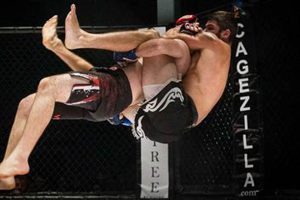
An unarmed physical altercation occurring outside of a sanctioned sporting environment, involving an individual trained in mixed martial arts, presents a significantly uneven playing field. This scenario contrasts sharply with regulated bouts where rules, weight classes, and referees ensure a degree of fairness and safety. An example would be an untrained individual engaging in a physical confrontation with a professional or amateur MMA competitor outside the confines of a ring or octagon.
Understanding the dynamics of such a confrontation is crucial for personal safety and risk assessment. The disciplined training received by MMA fighters equips them with a diverse skillset encompassing striking, grappling, and submission techniques, providing them a considerable advantage against an untrained opponent. This disparity highlights the potential for serious injury and underscores the importance of conflict avoidance. Historically, the romanticized image of the street fighter has often obscured the brutal reality of unarmed combat, and the increasing prevalence of MMA training further complicates these encounters.
This discussion will further explore the factors influencing such confrontations, including the legal ramifications, the ethical considerations, and strategies for de-escalation and self-preservation. Additionally, it will examine the common misconceptions surrounding self-defense and the importance of realistic threat assessment.
These tips offer guidance on mitigating the risks associated with a potential altercation involving someone trained in mixed martial arts. They emphasize de-escalation and self-preservation, recognizing the significant advantage a trained fighter possesses.
Tip 1: Avoid Confrontation: The most effective strategy is always avoidance. If possible, remove oneself from the situation entirely. This may involve leaving the area, ignoring provocations, or verbally diffusing the situation.
Tip 2: Seek Help: If avoidance is not feasible, immediately seek assistance from bystanders or authorities. A greater number of individuals may deter escalation.
Tip 3: Create Distance: Maintaining distance is crucial. A trained fighter excels in close-quarters combat. Creating space can reduce their ability to utilize their full range of skills.
Tip 4: Protect Vital Areas: Prioritize protecting the head and neck. These are primary targets in any physical altercation and particularly vulnerable to trained strikes.
Tip 5: Be Aware of Surroundings: Understanding the environment is critical. Look for obstacles, potential escape routes, and any objects that could be used for self-defense (though using an object introduces legal complexities).
Tip 6: De-escalate Verbally: Attempt to de-escalate the situation through calm and non-confrontational communication. Apologize, even if not at fault, to diffuse tension.
Tip 7: Comply with Demands: If compliance with reasonable demands can prevent physical harm, it’s a viable option. Material possessions are replaceable, personal safety is not.
Prioritizing personal safety through awareness, de-escalation, and strategic decision-making offers the best chance of navigating a potentially dangerous encounter with minimal harm.
By understanding the inherent dangers and employing these strategies, individuals can better equip themselves to handle such situations should they arise.
1. Uneven Playing Field

The concept of an “uneven playing field” is central to understanding the dynamics of a street fight involving an MMA fighter. The disparity in training creates a fundamental imbalance, significantly favoring the trained fighter. This imbalance stems from the fighter’s disciplined acquisition of skills in striking, grappling, and submissionstechniques honed through consistent practice and sparring. An untrained individual typically lacks these specialized skills and the conditioning to withstand the physical demands of such a confrontation. This disparity is akin to pitting a novice chess player against a grandmaster; the outcome is often predictable due to the stark difference in expertise.
Consider a hypothetical scenario where an untrained individual attempts to defend against a trained fighter’s takedown. The fighter’s superior understanding of leverage, balance, and body mechanics allows them to execute the takedown effectively, placing the untrained individual in a vulnerable position on the ground. From there, the fighter can employ a range of techniques, from ground-and-pound strikes to joint locks and chokes, that the untrained individual is ill-equipped to defend against. Real-life examples abound of altercations where trained fighters have quickly overwhelmed untrained opponents, often resulting in serious injury. This underscores the practical significance of understanding the inherent risks associated with such confrontations.
Recognizing the uneven playing field inherent in a street fight with an MMA fighter is crucial for promoting personal safety and informed decision-making. This understanding emphasizes the importance of avoiding such confrontations altogether. If avoidance is impossible, prioritizing de-escalation tactics and seeking assistance become paramount. The disparity in skills highlights the potential for severe consequences and reinforces the need for realistic self-defense strategies that prioritize escape and survival over engaging in a fight one is unlikely to win.
2. Significant Skill Disparity

Significant skill disparity is a defining characteristic of a street fight involving a mixed martial arts (MMA) practitioner. This disparity stems from the rigorous and specialized training undertaken by MMA fighters, encompassing disciplines like boxing, Muay Thai, wrestling, Brazilian Jiu-Jitsu, and Judo. This comprehensive training equips them with a diverse arsenal of offensive and defensive techniques, including strikes, takedowns, grappling, and submissions. An untrained individual typically lacks this specialized skill set and the physical conditioning necessary to effectively defend against such a wide range of attacks. This disparity creates an inherent power imbalance, significantly favoring the trained fighter and increasing the risk of serious injury for the untrained opponent.
This skill gap translates into a tangible advantage in a real-world confrontation. For example, an MMA fighter’s understanding of leverage and body mechanics can enable them to execute takedowns and control an opponent on the ground with relative ease. Their training in striking arts provides them with the precision and power to deliver devastating blows, while their grappling skills allow them to control the fight and apply submissions such as joint locks and chokes. Conversely, an untrained individual often relies on instinctual and unrefined techniques, making them vulnerable to the fighter’s superior skill and tactical approach. Documented instances of altercations between trained fighters and untrained individuals often demonstrate this disparity, with the untrained individual quickly overwhelmed and sustaining significant injuries.
Understanding the implications of this skill disparity is crucial for promoting realistic self-defense strategies. Recognizing the significant advantage possessed by a trained fighter underscores the importance of avoiding such confrontations whenever possible. Should avoidance be impossible, prioritizing de-escalation tactics and seeking assistance become paramount. Attempting to engage in a stand-up exchange or grappling with a trained fighter is highly discouraged due to the substantial risk of injury. The practical significance of understanding this disparity lies in promoting personal safety and informed decision-making in potentially dangerous situations. It emphasizes the need for strategies focused on escape and survival rather than attempting to “win” a fight against a highly skilled opponent.
3. High Risk of Serious Injury

The high risk of serious injury is an inherent and unavoidable aspect of a street fight involving a mixed martial arts (MMA) fighter. This elevated risk stems directly from the nature of MMA training, which emphasizes techniques designed to inflict significant damage and incapacitate opponents. These techniques include powerful strikes aimed at vulnerable areas like the head and neck, joint locks designed to break or dislocate limbs, and chokes that can render an opponent unconscious or even cause death. When employed against an untrained individual in an uncontrolled environment, these techniques pose a substantial threat of severe injury, including concussions, broken bones, internal bleeding, and long-term disabilities. The lack of rules and safety precautions present in a sanctioned fight further amplifies this risk.
Real-world examples illustrate the potential for devastating consequences. Altercations involving trained fighters have resulted in severe injuries to untrained individuals, highlighting the disparity in power and the effectiveness of MMA techniques in a street fight. The force generated by a trained fighter’s strikes can easily cause concussions and facial fractures, while their grappling skills can lead to joint dislocations and ligament tears. Furthermore, the uncontrolled nature of a street fight increases the likelihood of head injuries from falls or impacts with hard surfaces. These potential outcomes underscore the significant danger inherent in such confrontations.
Understanding the high risk of serious injury associated with a street fight involving an MMA fighter is paramount for promoting personal safety and informed decision-making. This understanding reinforces the importance of avoiding such confrontations altogether. Should avoidance be impossible, prioritizing de-escalation tactics and seeking assistance are crucial. Engaging in a physical altercation with a trained fighter should be considered a last resort due to the substantial risk of severe and potentially life-altering consequences. This awareness is essential for promoting responsible behavior and mitigating the potential for harm in real-world situations.
4. Importance of De-escalation

De-escalation is paramount in any potentially violent confrontation, but its significance is amplified when facing a trained mixed martial arts (MMA) fighter. Given the substantial skill disparity and the potential for serious injury, prioritizing de-escalation becomes not just a preferred strategy, but a critical factor in personal safety and minimizing harm. Understanding and employing de-escalation techniques can drastically alter the course of an encounter, potentially preventing a dangerous escalation.
- Verbal De-escalation:
Verbal de-escalation tactics aim to diffuse tension and avoid physical confrontation. This involves using calm, non-confrontational language, active listening, and empathy. Apologizing, even if not at fault, can sometimes defuse a situation. For example, in a potential confrontation with an MMA fighter, acknowledging their superior skills and expressing a desire to avoid conflict can help reduce their aggression. This approach recognizes the reality of the situation and prioritizes safety over ego.
- Non-Verbal Communication:
Non-verbal cues play a crucial role in de-escalation. Maintaining a non-threatening posture, avoiding direct eye contact (which can be perceived as a challenge), and keeping a safe distance can communicate a desire to avoid conflict. Slowly backing away while communicating verbally reinforces a peaceful intent. These non-verbal cues can significantly influence the other person’s perception of the situation, potentially preventing escalation.
- Strategic Compliance:
In some situations, complying with reasonable demands can be the most effective de-escalation strategy. If an aggressor is seeking material possessions, complying with their demands can prevent physical harm. While seemingly counterintuitive, prioritizing personal safety over material possessions is a pragmatic approach in a confrontation with a potentially dangerous individual. This recognizes the inherent value of avoiding physical confrontation, especially when facing someone with superior fighting skills.
- Creating Distance and Seeking Help:
Creating physical distance between oneself and a potential aggressor is a fundamental de-escalation tactic. Moving away, putting obstacles between oneself and the aggressor, or moving to a more public area can significantly reduce the risk of physical confrontation. Simultaneously, seeking assistance from bystanders or contacting authorities can further deter escalation. The presence of other individuals can influence the aggressor’s behavior and provide potential witnesses or support.
In the context of a street fight with an MMA fighter, de-escalation is not a sign of weakness but a demonstration of sound judgment and self-preservation. These tactics, when employed effectively, can significantly reduce the risk of serious injury or even death. By prioritizing de-escalation, individuals acknowledge the inherent dangers of confronting a trained fighter and choose the most prudent course of action: avoiding a fight they are unlikely to win.
5. Legal and Ethical Implications

A physical altercation involving a trained mixed martial arts (MMA) fighter outside a sanctioned sporting environment carries significant legal and ethical implications. The disparity in training and the potential for serious injury introduce complex considerations regarding self-defense, the use of excessive force, and the responsibilities of individuals trained in combat techniques.
- Assault and Battery:
Regardless of the circumstances leading to the altercation, engaging in a physical fight can constitute assault and battery. For the untrained individual, claiming self-defense might be challenging given the difficulty of proving imminent threat against a skilled fighter. Conversely, the MMA fighter’s training could be considered a factor in determining the severity of the assault, potentially leading to aggravated charges. For instance, a trained fighter using a rear-naked choke in a street fight could face more severe penalties than an untrained individual throwing a punch.
- Self-Defense and Excessive Force:
The legal concept of self-defense hinges on using proportionate force to counter an immediate threat. An MMA fighter, due to their training, possesses a wider range of defensive and offensive options. This raises questions about what constitutes reasonable force in self-defense. Using techniques learned in MMA training, even in response to an attack, could be deemed excessive force if it goes beyond what is necessary to neutralize the threat. For example, an MMA fighter continuing to strike an opponent who is already incapacitated could be considered excessive force.
- Duty to Retreat:
Many jurisdictions uphold a “duty to retreat,” requiring individuals to avoid physical confrontation if a safe retreat is possible. This legal principle complicates matters for trained fighters, who might possess the skills to defend themselves effectively. The expectation to prioritize de-escalation and avoidance remains, even with the ability to potentially “win” a fight. Failing to retreat when possible could undermine a self-defense claim. An MMA fighter choosing to engage in a fight when they could have safely walked away might face legal consequences.
- Ethical Considerations:
Beyond legal ramifications, ethical considerations arise concerning the use of specialized fighting skills in a street fight. MMA training instills discipline and control, raising ethical questions about employing these skills against untrained individuals. The potential for serious injury underscores the responsibility that comes with possessing such skills. From an ethical standpoint, an MMA fighter has a moral obligation to avoid violence whenever possible and to exercise restraint if forced to defend themselves. Their training should be viewed as a tool for self-preservation, not as a license to engage in street fights.
The legal and ethical complexities surrounding street fights involving MMA fighters underscore the importance of avoiding such situations entirely. Understanding the potential consequences, both legal and ethical, highlights the need for responsible behavior and the prioritization of de-escalation and peaceful conflict resolution. These considerations emphasize that MMA training should be used for self-improvement and sport, not for engaging in unregulated and potentially dangerous confrontations.
Frequently Asked Questions
This section addresses common inquiries regarding altercations involving trained mixed martial arts (MMA) fighters, providing factual and informative responses.
Question 1: Can an untrained individual realistically defend themselves against an MMA fighter?
Realistically, an untrained individual faces a substantial disadvantage against a trained MMA fighter. The fighters skill set encompasses a range of disciplines, making effective defense unlikely.
Question 2: What are the most common injuries sustained in a street fight against an MMA fighter?
Common injuries include concussions, facial fractures, broken bones, and joint dislocations. The severity can range from minor bruising to life-altering damage.
Question 3: Is it legal to use MMA techniques in self-defense?
While some MMA techniques might be permissible in self-defense, the legal standard hinges on using proportionate force. Excessive force, even with MMA training, can lead to legal repercussions.
Question 4: How can one de-escalate a confrontation with an MMA fighter?
De-escalation tactics include avoiding eye contact, maintaining a non-threatening posture, using calm language, apologizing, and complying with reasonable demands. Prioritizing escape is crucial.
Question 5: What are the legal consequences of engaging in a street fight with an MMA fighter?
Legal consequences can range from misdemeanor assault charges to felony charges, depending on the severity of the injuries inflicted and the jurisdiction. Both parties may face legal action.
Question 6: Does MMA training provide an unfair advantage in a street fight?
MMA training undeniably provides a significant advantage in a physical altercation due to the comprehensive nature of the skill set. This advantage increases the importance of avoiding such confrontations.
Understanding the dynamics and potential consequences of a street fight involving an MMA fighter underscores the importance of avoiding such situations. Prioritizing personal safety and employing de-escalation tactics remain the most prudent course of action.
The following section will further explore strategies for avoiding and managing confrontations, emphasizing practical safety measures.
Street Fight with MMA Fighter
Analysis of a physical altercation involving a trained mixed martial arts (MMA) fighter reveals a critical imbalance. The fighter’s comprehensive training, encompassing striking, grappling, and submission techniques, creates a significant advantage against an untrained opponent. This disparity in skill elevates the risk of serious injury, emphasizing the importance of avoiding such confrontations. De-escalation tactics, prioritizing verbal diffusion, spatial distancing, and compliance with reasonable demands, are paramount for mitigating potential harm. Legal and ethical considerations further underscore the responsibility associated with possessing such skills, highlighting the need for restraint and the avoidance of unnecessary violence. The potential consequences, both physical and legal, for all parties involved emphasize the gravity of such encounters.
Ultimately, understanding the dynamics of a street fight with an MMA fighter underscores the critical importance of prioritizing personal safety, exercising sound judgment, and recognizing the severe implications of engaging in physical violence. This awareness promotes responsible behavior and empowers individuals to make informed decisions that mitigate risk and prioritize peaceful conflict resolution. Continued education regarding the realities of violence and the benefits of de-escalation remains crucial for fostering safer communities.