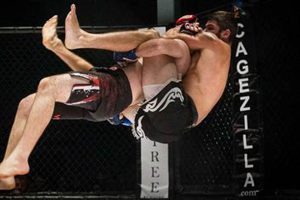
An individual trained in mixed martial arts (MMA) engaging in unsanctioned combat outside of a regulated sporting environment presents a complex scenario. This involves someone with specific fighting skills participating in a fight with minimal rules or safety precautions, often occurring in public spaces. Examples include altercations arising from disputes or spontaneous confrontations.
Understanding the dynamics of such encounters is crucial for several reasons. It highlights the potential dangers of applying trained combat techniques in uncontrolled settings, where the legal and ethical implications can be severe. Additionally, it provides a perspective on the effectiveness of MMA training in real-world self-defense situations, contrasting the controlled environment of the ring or cage with the unpredictable nature of a street fight. Examining these scenarios also sheds light on the broader societal discourse surrounding violence, self-defense, and the role of martial arts training.
This discussion will delve further into the legal ramifications, ethical considerations, and the potential consequences of engaging in unsanctioned combat, especially for those with formal combat training. It will also explore the practical differences between sport fighting and self-defense, emphasizing the importance of de-escalation tactics and responsible use of acquired skills.
Individuals with mixed martial arts (MMA) training may find themselves in situations where self-defense becomes necessary. The following tips offer guidance for navigating such circumstances responsibly and effectively.
Tip 1: Awareness and Avoidance: Cultivating situational awareness is paramount. Scanning surroundings, identifying potential threats, and taking preemptive measures to avoid confrontation are crucial first steps.
Tip 2: De-escalation: Verbal de-escalation techniques can often prevent physical altercations. Calm, assertive communication can diffuse tense situations and create an opportunity for disengagement.
Tip 3: Proportionality: If physical engagement becomes unavoidable, using force proportional to the threat is essential. Employing excessive force can have severe legal and ethical consequences.
Tip 4: Legal Awareness: Understanding the legal framework surrounding self-defense is critical. Actions perceived as exceeding the boundaries of self-defense can lead to legal repercussions.
Tip 5: Control and Restraint: The objective in a self-defense scenario is to neutralize the threat, not inflict unnecessary harm. Techniques emphasizing control and restraint over aggressive attacks are recommended.
Tip 6: Disengagement and Escape: Once the immediate threat is neutralized, disengaging and seeking safety should be the priority. Prolonging the confrontation increases the risk of injury and legal complications.
Tip 7: Post-Incident Actions: Contacting law enforcement and seeking medical attention, if necessary, are vital steps following a self-defense incident. Accurate and timely reporting can be crucial for legal protection.
Prioritizing de-escalation, utilizing proportional force, and adhering to legal boundaries are key takeaways for anyone trained in combat sports who may face a self-defense situation. These principles promote responsible and effective responses to potential threats while minimizing risks.
The following section will further explore the importance of responsible decision-making and the potential consequences of engaging in unsanctioned combat.
1. Unpredictable Environment

The unpredictable environment of a street fight presents a stark contrast to the controlled setting of professional MMA. Sanctioned matches occur within a defined space, with regulations governing conduct and ensuring a degree of safety. Street fights, however, offer no such guarantees. The location can vary drastically, from uneven pavement to confined spaces, impacting footing and maneuverability. The presence of bystanders, potential weapons, and unpredictable interventions further contribute to the chaotic nature of these encounters. This lack of control significantly amplifies the inherent risks for all involved, particularly for someone trained in MMA whose techniques may be less effective or even detrimental in such an uncontrolled setting. For example, a takedown maneuver effective in the ring could result in serious injury on concrete.
This unpredictable nature necessitates a different approach to self-defense compared to sport fighting. While MMA training emphasizes offensive and defensive techniques within a rule-bound environment, a street fight demands adaptability and heightened awareness. Reacting to unforeseen circumstances, such as multiple assailants or improvised weapons, becomes paramount. The potential for rapid escalation underscores the importance of de-escalation tactics and prioritizing escape over engagement when possible. An individual trained in MMA might possess superior fighting skills, but these advantages can be negated by the unpredictable variables inherent in a street fight. The presence of obstacles, uneven terrain, or the intervention of third parties can quickly shift the balance of power.
In summary, the unpredictable environment inherent in street fights presents significant challenges and risks, especially for those with formal combat training. Adaptability, situational awareness, and a focus on de-escalation become crucial for navigating these scenarios effectively and minimizing potential harm. Recognizing the limitations of training within a controlled environment compared to the chaotic reality of a street fight is essential for responsible decision-making and prioritizing personal safety.
2. Limited Rules/Regulations

The absence of established rules and regulations fundamentally distinguishes a street fight from a sanctioned MMA match. Within the confines of a regulated competition, unified rules govern permissible actions, weight classes ensure a degree of fairness, and referees enforce these regulations to minimize serious injury. This structured environment fosters a competitive landscape where skill and strategy are paramount. A street fight, conversely, operates without these constraints. No governing body dictates permissible techniques, no weight classes exist, and no referee intervenes to stop excessive force or fouls. This lack of regulation creates a volatile and unpredictable environment where the potential for serious injury or even fatality escalates significantly. The use of weapons, multiple assailants, and unpredictable interventions by bystanders further complicate the scenario. This underscores a critical distinction: while MMA fighters train within a structured framework with clearly defined limitations, a street fight offers no such boundaries.
This disparity in regulation has profound implications for an MMA fighter engaging in a street fight. Techniques honed within the regulated environment of the sport might be inappropriate or even counterproductive in a no-holds-barred scenario. For example, a trained fighter’s instinct to take an opponent to the ground, a standard tactic in MMA, could prove disastrous on a concrete surface. Furthermore, the absence of rules encourages escalation. An opponent might resort to tactics deemed illegal in a sanctioned match, such as eye-gouging or biting. The MMA fighter, trained to operate within a specific framework, may be unprepared for such unregulated aggression. This contrast highlights the inherent danger of applying sport-specific training to a real-world self-defense situation where the rules are effectively nonexistent.
In conclusion, the absence of established rules and regulations in a street fight creates a volatile and unpredictable environment. This lack of structure amplifies the risks for all participants, especially for those trained in MMA. The potential for escalation, the use of prohibited techniques, and the absence of external interventions to mitigate violence underscore the critical differences between sanctioned combat sports and the realities of a street fight. Understanding these distinctions is essential for responsible decision-making, emphasizing the importance of avoiding unsanctioned confrontations and prioritizing personal safety.
3. Ethical Implications

Significant ethical implications arise when considering an individual trained in mixed martial arts (MMA) engaging in a street fight. The disparity in training and the potential for serious harm introduce complex moral questions. A trained fighter possesses a distinct advantage over an untrained opponent, raising concerns about the proportionate use of force. While self-defense is a legitimate right, the line between justifiable action and excessive force blurs when one party holds significantly superior combat skills. Inflicting serious injury or even death on an untrained individual, even in self-defense, carries a substantial ethical burden. This becomes particularly pertinent when the MMA fighter could have potentially de-escalated or disengaged from the situation, leveraging their training to control and restrain rather than inflict harm. For instance, an MMA fighter choosing to deliver a knockout blow to an untrained individual who posed a minimal threat raises serious ethical questions regarding the necessity and proportionality of the force used.
Furthermore, the very act of engaging in a street fight, even in self-defense, raises ethical concerns for a trained MMA fighter. The controlled environment of a sanctioned MMA bout provides a structured outlet for applying combat skills within established rules and safety regulations. A street fight, however, lacks these safeguards, introducing an element of unnecessary risk and potential harm. The fighter’s training inherently elevates the potential for severe injury to the opponent, raising questions about the responsibility that comes with possessing such skills. Choosing to participate in an unsanctioned fight, even when provoked, could be viewed as a violation of an ethical obligation to use those skills responsibly and avoid unnecessary violence. Consider a scenario where an MMA fighter, easily capable of disengaging, instead chooses to engage in a street fight. This decision, even if legally justifiable as self-defense, raises ethical concerns about the responsible use of superior combat skills.
In conclusion, the ethical implications of an MMA fighter participating in a street fight are multifaceted and significant. The potential for disproportionate use of force, the inherent escalation of risk in an uncontrolled environment, and the responsibility that comes with possessing specialized combat skills all contribute to the ethical complexity. Understanding these considerations underscores the importance of prioritizing de-escalation, employing restraint, and recognizing the ethical weight of engaging in unsanctioned combat. The decision to participate in a street fight, even in self-defense, should be weighed carefully, considering the potential for harm, the ethical responsibilities associated with advanced combat training, and the potential for alternative, non-violent resolutions.
4. Legal Consequences

Engaging in a street fight, particularly as someone trained in mixed martial arts (MMA), carries significant legal consequences. The legal framework surrounding self-defense is complex and varies by jurisdiction, but generally requires the force used to be proportional to the threat faced. An MMA fighter, possessing advanced combat skills, faces greater scrutiny regarding the proportionality of force used in a street fight. Actions easily justifiable for an untrained individual might be deemed excessive force when performed by someone with extensive combat training. The potential consequences range from assault and battery charges, carrying penalties like fines and imprisonment, to more severe charges like manslaughter or even murder, depending on the outcome of the altercation. For example, an MMA fighter using a trained striking technique resulting in severe injury or death could face aggravated assault charges or even homicide charges, despite claiming self-defense, due to the perceived disparity in fighting ability.
Several factors influence the legal interpretation of an MMA fighter’s actions in a street fight. The initiation of the confrontation, the availability of retreat options, and the specific techniques employed all play a crucial role in determining legal culpability. Even if legally justified as self-defense, an MMA fighter could still face civil lawsuits for damages resulting from injuries inflicted during the fight. The perception of a trained fighter using excessive force can significantly impact legal proceedings, influencing jury decisions and potentially leading to unfavorable outcomes. Consider a scenario where an MMA fighter, skilled in submissions, applies a chokehold in a street fight, resulting in the opponent’s unconsciousness or even death. While the fighter might argue self-defense, the legal system will scrutinize whether less lethal force could have been employed given their training and the specific circumstances of the altercation.
In summary, understanding the legal ramifications of engaging in a street fight is crucial for anyone, particularly those with MMA training. The potential for severe legal consequences, including criminal charges and civil lawsuits, underscores the importance of avoiding unsanctioned combat. Prioritizing de-escalation tactics, utilizing restraint, and adhering to the principles of proportional force are essential for minimizing legal risks and ensuring actions align with the legal framework surrounding self-defense. The possession of advanced combat skills carries a significant responsibility, and understanding the potential legal consequences of using those skills outside of a sanctioned environment is paramount for responsible decision-making.
5. Disparity in Training

Disparity in training plays a critical role in the dynamics of a street fight involving an MMA fighter. The significant difference in combat skills and experience between a trained fighter and an untrained individual creates an uneven playing field, raising ethical and legal concerns regarding the use of force and the potential for serious injury. Examining this disparity is crucial for understanding the complexities and potential consequences of such encounters.
- Predictability and Reaction Time:
Trained fighters possess heightened reflexes and anticipatory abilities developed through rigorous practice. They can predict an opponent’s movements and react more quickly, giving them a significant advantage in a fight. This disparity in reaction time can lead to an untrained individual being overwhelmed before they can effectively defend themselves. For example, an MMA fighter might preemptively block or counter an untrained individual’s attack before it fully develops, leaving the untrained person vulnerable to a swift and decisive counterattack.
- Technique and Power Generation:
MMA training emphasizes efficient techniques for generating power and maximizing impact. Trained fighters understand how to leverage their body weight and mechanics to deliver strikes with significantly greater force than an untrained individual. This disparity in striking power can result in serious injuries, even from seemingly basic techniques. A trained fighter’s jab, for example, can possess significantly more force and precision than an untrained individual’s punch, potentially leading to a knockout or serious facial injuries.
- Grappling and Ground Control:
MMA incorporates grappling and ground fighting techniques, providing trained fighters with a significant advantage in controlling and subduing opponents on the ground. An untrained individual likely lacks the skills to defend against takedowns, submissions, and ground-and-pound attacks, increasing their vulnerability to serious injury. A trained fighter can quickly take an untrained opponent to the ground, establish a dominant position, and apply a submission hold or deliver strikes from a position of control, leading to a swift and decisive victory.
- Strategic Thinking and Adaptability:
MMA training cultivates strategic thinking and adaptability, allowing fighters to assess their opponent’s strengths and weaknesses, adjust their tactics mid-fight, and exploit openings. This strategic advantage contrasts sharply with an untrained individual’s likely reliance on instinct and brute force, often resulting in predictable and ineffective attacks. A trained fighter can analyze an untrained opponent’s movements, identify patterns, and capitalize on their lack of technical proficiency, creating opportunities for counterattacks and quickly gaining control of the fight.
These facets of disparity in training underscore the significant advantage an MMA fighter possesses in a street fight against an untrained individual. This advantage raises ethical questions about the responsible use of force and highlights the potential for serious, unintended consequences. While MMA training provides valuable self-defense skills, recognizing the disparity in training and prioritizing de-escalation and restraint become crucial for mitigating the risks inherent in such encounters. Engaging in a street fight against an untrained opponent carries significant legal and ethical implications, emphasizing the importance of avoiding such confrontations whenever possible.
6. Escalation Potential

Escalation potential in a street fight involving a mixed martial arts (MMA) fighter represents a significant concern due to the inherent power imbalance. The trained fighters advanced skills and knowledge of combat techniques can inadvertently escalate the level of violence. A seemingly controlled response, such as a well-placed strike intended to de-escalate by incapacitating the opponent, may result in unintended severe injury due to the force generated by trained techniques. This disparity in fighting ability can create a volatile situation where the untrained opponent, feeling overwhelmed, might resort to desperate measures, including using weapons or calling for assistance from others, further escalating the conflict. For instance, a trained fighter’s attempt to restrain an untrained aggressor could be misinterpreted as an attack, leading the aggressor to escalate the use of force in self-perceived defense.
Furthermore, the psychological dynamics of a street fight involving an MMA fighter can contribute to escalation. The untrained individual, recognizing the fighter’s skill, might experience heightened fear and anxiety, leading to unpredictable reactions. This fear can manifest as increased aggression, desperate attempts to escape, or even preemptive attacks fueled by panic. Conversely, the MMA fighter, despite their training, might also experience psychological pressure. The legal and ethical implications of using their skills outside a sanctioned environment can create hesitation or, conversely, a heightened sense of vulnerability, potentially leading to excessive force in an attempt to quickly neutralize the perceived threat. For example, an MMA fighter, aware of the potential legal consequences, might hesitate to use their full skillset, prolonging the confrontation and increasing the likelihood of escalation by the other party.
Understanding the escalation potential inherent in these scenarios underscores the critical importance of de-escalation tactics and avoiding confrontation whenever possible. Recognizing the potential for unintended consequences, even from seemingly controlled responses, is crucial for responsible decision-making. For individuals trained in MMA, prioritizing situational awareness, verbal de-escalation, and employing restraint are paramount. The goal should always be to minimize harm and disengage from the situation as quickly and safely as possible. The potential legal and ethical ramifications of escalating a street fight, regardless of the initial provocation, reinforce the importance of avoiding such confrontations. The consequences can range from criminal charges to civil lawsuits, significantly impacting the lives of all parties involved.
Frequently Asked Questions
This section addresses common inquiries regarding the complexities and potential consequences of an individual trained in mixed martial arts (MMA) engaging in unsanctioned combat outside of a regulated sporting environment.
Question 1: How does MMA training translate to a real-world self-defense scenario, particularly a street fight?
While MMA training provides valuable self-defense skills, such as striking, grappling, and takedown defense, the uncontrolled and unpredictable nature of a street fight presents unique challenges. The absence of rules, potential for multiple assailants, and the presence of weapons significantly alter the dynamics compared to a sanctioned bout. Techniques effective in the ring might be impractical or even dangerous on uneven terrain or in confined spaces. The emphasis shifts from sport-specific strategies to situational awareness, de-escalation, and prioritizing escape.
Question 2: What are the legal ramifications of an MMA fighter using their skills in a street fight, even in self-defense?
The legal consequences can be severe. The principle of proportional force is crucial. Even in self-defense, using excessive force given one’s training can lead to charges ranging from assault and battery to manslaughter or homicide. The legal system scrutinizes the necessity and proportionality of the force employed, considering the fighter’s training advantage. Civil lawsuits for damages are also a possibility.
Question 3: Is it ethically permissible for someone trained in MMA to participate in a street fight?
Ethical concerns arise due to the inherent power imbalance. The trained fighter’s skills create a significant advantage, raising questions about the responsible use of force. Inflicting serious harm on an untrained opponent, even in self-defense, carries ethical weight, particularly when alternative options like de-escalation or disengagement exist. The responsibility associated with possessing advanced combat skills necessitates careful consideration of the potential consequences.
Question 4: How does the absence of rules and regulations in a street fight impact an MMA fighter’s approach?
The lack of rules creates a significantly more dangerous and unpredictable environment. Techniques permissible within the regulated confines of MMA competition might be inappropriate or even counterproductive in a street fight. The absence of a referee to enforce rules and ensure fairness further increases the risk of serious injury. An MMA fighter must adapt their approach, prioritizing situational awareness and de-escalation over sport-specific strategies.
Question 5: What are the primary dangers of a street fight for someone trained in MMA?
Beyond the legal and ethical implications, the unpredictable environment poses significant physical dangers. Uneven surfaces, potential weapons, multiple assailants, and bystander intervention all contribute to the chaotic and risky nature of a street fight. The potential for serious injury, even with advanced training, is substantial. Prioritizing avoidance and de-escalation is crucial for minimizing risk.
Question 6: How can an MMA fighter mitigate the risks and ethical concerns associated with street fights?
Prioritizing de-escalation through verbal communication and situational awareness is paramount. If physical confrontation becomes unavoidable, using only the necessary force for self-defense and disengaging as quickly as possible are crucial. Understanding the legal ramifications of one’s actions and adhering to the principle of proportional force is essential. Continuous self-reflection on the ethical responsibilities that accompany combat training can inform responsible decision-making.
Understanding the legal, ethical, and practical implications of engaging in unsanctioned combat is paramount for anyone, particularly those with formal combat training. Prioritizing responsible decision-making, de-escalation tactics, and the ethical use of force are crucial for navigating these complex scenarios and minimizing potential harm.
The following section will delve into further case studies and real-world examples to illustrate these key concepts.
Conclusion
The examination of an MMA fighter engaging in a street fight reveals a complex interplay of factors. The disparity in training, the absence of established rules, and the unpredictable environment inherent in unsanctioned combat create a volatile mix with significant legal and ethical implications. While MMA training provides valuable self-defense skills, its application outside the controlled setting of a sanctioned bout necessitates careful consideration. The potential for unintended consequences, escalating violence, and severe legal repercussions underscores the importance of prioritizing de-escalation, restraint, and responsible decision-making. The ethical burden associated with possessing advanced combat skills requires continuous self-reflection and a commitment to using such skills judiciously and only when absolutely necessary.
The exploration of this topic serves as a crucial reminder of the responsibility that accompanies combat training. It highlights the critical distinction between sport fighting and real-world self-defense, emphasizing the need for ongoing education and thoughtful consideration of the potential consequences of engaging in unsanctioned combat. Promoting a culture of responsible behavior, prioritizing de-escalation tactics, and fostering a deep understanding of the legal and ethical boundaries surrounding the use of force remain essential for mitigating the risks inherent in these complex scenarios. Further research and open discussion within the martial arts community are vital for fostering a greater understanding of these critical issues and promoting responsible practices both inside and outside the training environment.