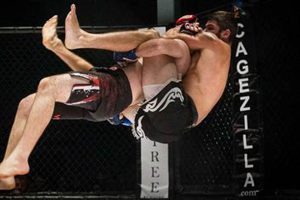
A mixed martial artist (MMA) is a professional combat sports athlete trained in various fighting disciplines, including striking, grappling, and wrestling. These athletes compete in sanctioned bouts, adhering to specific rules and weight classes, demonstrating proficiency in techniques from disciplines like boxing, Muay Thai, Brazilian Jiu-Jitsu, wrestling, and judo. For example, a competitor might employ boxing combinations to set up a takedown, transitioning to a submission hold derived from Brazilian Jiu-Jitsu.
The rise of this multifaceted combat sport has elevated athleticism and strategic thinking in fighting. Requiring rigorous training and discipline, it showcases a blend of physical prowess, technical skill, and mental fortitude. Its evolution from more traditional single-discipline martial arts has created a dynamic and demanding sport with a global following, pushing the boundaries of combat sports competition.
Further exploration of this topic will cover training regimens, weight classes, prominent figures, the role of governing bodies, and the future of the sport.
Tips for Aspiring Mixed Martial Artists
Entering the world of professional mixed martial arts requires dedication, discipline, and a strategic approach. These tips offer guidance for individuals considering this demanding yet rewarding career path.
Tip 1: Diversify Training: Mastery of a single martial art is insufficient. Training should encompass striking disciplines (e.g., boxing, Muay Thai, kickboxing), grappling (e.g., wrestling, judo), and ground fighting (e.g., Brazilian Jiu-Jitsu). A well-rounded skill set is crucial for success.
Tip 2: Prioritize Conditioning: Competitions demand peak physical condition. Focus on strength and conditioning programs incorporating cardiovascular training, weightlifting, and flexibility exercises. Endurance is as crucial as strength and power.
Tip 3: Seek Experienced Coaching: Expert guidance is essential for skill development and strategic refinement. Coaches provide personalized training plans, identify weaknesses, and offer valuable insights based on their experience.
Tip 4: Study Fight Footage: Analyzing professional bouts offers valuable learning opportunities. Observe techniques, strategies, and tactical adjustments employed by successful competitors. This provides a deeper understanding of the sport’s nuances.
Tip 5: Control Weight Effectively: Competing in the appropriate weight class maximizes performance. Adopt healthy dietary habits and monitor weight consistently to ensure optimal fighting condition without compromising health.
Tip 6: Develop Mental Fortitude: Mental strength is as important as physical prowess. Cultivate resilience, discipline, and the ability to remain focused under pressure. Mental preparation is key to overcoming challenges within the cage.
Tip 7: Spar Regularly: Controlled sparring sessions provide invaluable experience. They allow for the application of learned techniques in a simulated combat environment, improving timing, reflexes, and adaptability.
Consistent adherence to these guidelines will contribute significantly to an individual’s progress and potential for success in mixed martial arts. These foundational elements pave the way for a rewarding journey in this demanding sport.
This foundational knowledge provides a basis for further exploration of specific training methods, dietary considerations, and the intricacies of professional competition.
1. Skilled Combatant

At the core of understanding a mixed martial artist lies the concept of a skilled combatant. This signifies far more than mere proficiency in fighting; it represents a nuanced blend of technical expertise, tactical acumen, and adaptive prowess within the dynamic environment of a mixed martial arts contest. Examining specific facets of this skill set provides a deeper understanding of what defines a true mixed martial artist.
- Technical Proficiency:
Technical proficiency forms the foundation of a skilled combatant. This encompasses mastery of individual techniques from various disciplines, including striking (punches, kicks, elbows, knees), grappling (takedowns, throws, clinching), and ground fighting (submissions, positional control). For example, precise execution of a rear-naked choke in Brazilian Jiu-Jitsu, or a perfectly timed head kick in Muay Thai, exemplifies technical proficiency. Without this foundational mastery, effective execution of tactics becomes impossible.
- Tactical Acumen:
Tactical acumen distinguishes a skilled combatant from a mere technician. It involves the ability to analyze an opponent’s strengths and weaknesses, formulate a fight plan, and adapt that plan in real-time. A fighter might, for instance, use boxing combinations to set up a takedown, then transition to a dominant grappling position. This strategic application of techniques demonstrates tactical acumen within the fight.
- Adaptive Prowess:
The unpredictable nature of mixed martial arts necessitates adaptive prowess. A skilled combatant must adjust to unforeseen circumstances, capitalize on openings, and defend against unexpected attacks. Reacting to a missed takedown by transitioning to a leg lock, or countering a striking combination with a well-timed takedown, exemplifies adaptive prowess. This ability to adjust and improvise is crucial for success.
- Controlled Aggression:
Controlled aggression allows a skilled combatant to effectively utilize their skills without compromising technique or strategy. It involves knowing when to press the attack, when to defend, and when to conserve energy. A fighter who maintains composure under pressure, delivering precise strikes and takedowns without becoming reckless, demonstrates controlled aggression. This balance between aggression and control maximizes effectiveness while minimizing vulnerability.
These interconnected facets define a skilled combatant in mixed martial arts. Technical proficiency provides the tools, tactical acumen dictates their application, adaptive prowess ensures effectiveness in dynamic situations, and controlled aggression governs their execution. The convergence of these attributes ultimately distinguishes a true mixed martial artist.
2. Multi-disciplinary Training
Multi-disciplinary training is integral to the identity of a mixed martial artist. It distinguishes the sport from traditional single-discipline martial arts and necessitates a diverse skill set. This training approach directly addresses the multifaceted nature of MMA competition, where proficiency in striking, grappling, and ground fighting is essential for success. A fighter relying solely on striking, for example, becomes vulnerable to takedowns and submissions. Conversely, a grappler lacking striking proficiency struggles to control distance and initiate takedowns effectively. The blend of disciplines creates a complex and dynamic combat environment demanding well-rounded training.
Real-world examples underscore the importance of multi-disciplinary training. Georges St-Pierre, a prominent MMA figure, combined world-class wrestling with refined striking and strong submission defense. Similarly, Amanda Nunes, another prominent MMA fighter, seamlessly integrates boxing, Brazilian Jiu-Jitsu, and Muay Thai into her fighting style. These examples demonstrate the practical significance of cross-training, enabling fighters to exploit opponents’ weaknesses while mitigating their own vulnerabilities. This adaptability is directly attributable to multi-disciplinary training.
In summary, multi-disciplinary training is not merely a component of MMA; it defines the very essence of what it means to be a mixed martial artist. It provides the necessary tools to navigate the complexities of the sport, adapt to diverse fighting styles, and achieve comprehensive fighting proficiency. Ignoring this crucial aspect limits a fighter’s potential and increases vulnerability within the cage. This understanding highlights the crucial link between cross-training and success in the dynamic world of mixed martial arts.
3. Strategic Adaptability

Strategic adaptability is paramount in defining a mixed martial artist. It represents the capacity to adjust fight plans and techniques in real-time, reacting effectively to an opponent’s tactics. This dynamic in-fight adjustment is crucial for capitalizing on opportunities and mitigating threats, distinguishing successful fighters from those who rigidly adhere to pre-determined strategies. The following facets illuminate the components and significance of strategic adaptability within the context of mixed martial arts.
- Reading Opponents:
Reading an opponent involves recognizing patterns in their movements, identifying their strengths and weaknesses, and anticipating their likely actions. This real-time analysis informs tactical decisions, allowing fighters to exploit weaknesses and counter strengths effectively. For example, noticing an opponent’s tendency to overcommit on punches might create an opening for a takedown. This ability to “read” opponents mid-fight is crucial for successful adaptation.
- Adjusting Game Plans:
A pre-fight game plan provides a framework, but rarely survives the dynamic nature of a bout unchanged. Strategic adaptability involves deviating from the initial plan when necessary. If a fighter’s striking proves ineffective, they might shift to a grappling-focused approach. This flexibility in adapting the game plan is essential for maximizing chances of victory.
- Exploiting Openings:
Strategic adaptability involves capitalizing on fleeting opportunities that arise during a fight. A missed kick, a dropped guard, or a momentary lapse in concentration can create an opening for a counter-attack or a change in strategy. Capitalizing on these moments often determines the outcome of a bout, showcasing the importance of quick thinking and decisive action.
- Countering Techniques:
Effective countering requires not only recognizing an opponent’s techniques but also implementing appropriate defensive and offensive responses. A fighter might counter a takedown attempt with a sprawl or a guillotine choke, or counter a jab with a cross. This ability to counter effectively turns defense into offense, a hallmark of strategic adaptability.
These interconnected facets of strategic adaptability underscore its significance in defining a mixed martial artist. It’s the ability to analyze, adjust, and execute in the heat of battle that distinguishes truly elite fighters. This dynamic decision-making, coupled with technical skill and physical conditioning, ultimately determines success in the complex and ever-evolving world of mixed martial arts. Without strategic adaptability, a fighter becomes predictable and vulnerable, significantly diminishing their chances of victory.
4. Peak Physical Conditioning

Peak physical conditioning is not merely an advantage for a mixed martial artist; it is a fundamental requirement. The demanding nature of the sport, characterized by explosive movements, sustained grappling, and the ability to absorb and deliver powerful strikes, necessitates an exceptional level of fitness. This connection between peak physical conditioning and the definition of a mixed martial artist goes beyond simply being “in shape.” It encompasses several interconnected elements, each crucial for success within the octagon.
Consider the cause-and-effect relationship: A fighter lacking adequate cardiovascular endurance will fatigue rapidly, compromising technique, reaction time, and ultimately, the ability to compete effectively. Strength and power are essential for generating forceful strikes and takedowns, while flexibility and mobility are crucial for executing techniques and avoiding injury. Real-world examples abound: Fighters renowned for their exceptional conditioning, such as Georges St-Pierre and Khabib Nurmagomedov, consistently demonstrated the ability to maintain a high pace throughout their bouts, outlasting and overpowering opponents. Conversely, fighters lacking this crucial attribute often falter in later rounds, becoming vulnerable to more conditioned adversaries. This highlights the practical significance of peak physical conditioning as a defining characteristic of a successful mixed martial artist.
Furthermore, the importance of peak physical conditioning extends beyond individual bouts. The rigorous training regimens required to achieve and maintain this level of fitness demand discipline, resilience, and a commitment to a demanding lifestyle. This dedication further shapes the identity of a mixed martial artist, contributing to mental fortitude and a relentless pursuit of excellence. Challenges such as weight cutting, injury prevention, and maintaining peak performance over time underscore the ongoing commitment required. In conclusion, peak physical conditioning is inseparable from the definition of a mixed martial artist. It is a prerequisite for success, a testament to dedication, and a defining characteristic of this demanding and dynamic sport. This understanding provides a crucial insight into the physical demands placed on these athletes and the crucial role of conditioning in achieving victory within the octagon.
5. Mental Resilience

Mental resilience is a cornerstone of a mixed martial artist’s identity, distinguishing successful competitors from those who falter under pressure. The intense physical demands, strategic complexities, and inherent risks of the sport require a robust mental fortitude. This resilience enables fighters to manage fear, overcome setbacks, maintain focus amidst chaos, and persevere through grueling training regimens and high-stakes competitions.
- Managing Fear and Anxiety:
Stepping into the cage inherently evokes fear and anxiety. Mental resilience allows fighters to acknowledge these emotions without being paralyzed by them. It involves developing coping mechanisms, such as visualization and controlled breathing, to manage pre-fight nerves and maintain composure under duress. Examples include fighters who, despite experiencing fear, can execute their game plan effectively, demonstrating that mental resilience is not the absence of fear, but the ability to manage it.
- Coping with Setbacks:
Setbacks, such as losing a fight or suffering an injury, are inevitable in mixed martial arts. Mental resilience enables fighters to bounce back from these adversities, learn from mistakes, and maintain motivation. Fighters who return from losses with renewed determination and refined strategies exemplify this resilience. They view setbacks not as failures, but as opportunities for growth and improvement.
- Maintaining Focus Under Pressure:
MMA bouts are dynamic and unpredictable. Mental resilience allows fighters to maintain focus amidst distractions, such as crowd noise, trash talk, and unexpected strikes. This ability to remain present and execute the game plan, even when facing adversity, is crucial for success. Fighters who can maintain composure and execute techniques effectively despite absorbing heavy blows demonstrate this critical mental attribute.
- Persevering Through Adversity:
The training required to become a successful mixed martial artist is physically and mentally grueling. Mental resilience fuels the perseverance needed to push through pain, fatigue, and the inevitable challenges of a demanding training schedule. This dedication, often unseen by the public, is a testament to the mental strength required to reach the highest levels of competition.
These interconnected facets of mental resilience directly influence a fighter’s performance and longevity in the sport. It is this mental fortitude, combined with physical prowess and technical skill, that defines a true mixed martial artist. The ability to manage fear, overcome setbacks, maintain focus, and persevere through adversity ultimately distinguishes those who succeed in this demanding and unforgiving sport. This understanding highlights the crucial role of mental resilience, not just as a desirable trait, but as a fundamental component of what it means to be a mixed martial artist.
6. Disciplined Lifestyle
A disciplined lifestyle is not merely a beneficial habit for mixed martial artists; it is a fundamental requirement, inextricably linked to their identity and success. The demanding nature of the sport necessitates a rigorous approach to training, diet, rest, and recovery. This disciplined approach permeates every aspect of a fighter’s life, shaping not only their physical capabilities but also their mental fortitude and overall approach to competition. Understanding this connection is crucial for grasping the full scope of what it means to be a mixed martial artist.
- Rigorous Training Regimens:
Success in mixed martial arts demands adherence to demanding training schedules encompassing various disciplines. This includes strength and conditioning, striking, grappling, and ground fighting, often requiring multiple training sessions per day. This commitment extends beyond physical exertion, encompassing technical refinement, strategic development, and constant adaptation. Examples include fighters dedicating years to mastering specific martial arts, consistently pushing their physical limits, and prioritizing training above other commitments. This unwavering dedication to training forms the bedrock of a disciplined lifestyle.
- Strict Dietary Control:
Maintaining optimal fighting weight and fueling the body for intense training requires strict dietary control. This involves careful monitoring of caloric intake, macronutrient balance, and hydration. Fighters often work closely with nutritionists to develop personalized meal plans that support their training demands and ensure they compete in their optimal weight class. This disciplined approach to nutrition is essential for maximizing performance and recovery.
- Prioritizing Rest and Recovery:
The physical toll of intense training necessitates prioritizing rest and recovery. Adequate sleep, active recovery methods like stretching and foam rolling, and injury prevention strategies are integral components of a disciplined lifestyle. Ignoring these aspects can lead to overtraining, increased risk of injury, and diminished performance. Understanding the importance of recovery is a key element of a disciplined approach to training.
- Mental Discipline and Focus:
Beyond physical demands, mixed martial arts requires significant mental discipline. Maintaining focus during training, managing pre-fight anxiety, and developing the mental fortitude to overcome setbacks are all crucial aspects of a disciplined mindset. This mental resilience is cultivated through practices like meditation, visualization, and maintaining a positive mental attitude. This disciplined mental approach is essential for navigating the challenges of the sport.
These interconnected facets of a disciplined lifestyle are integral to the identity and success of a mixed martial artist. They highlight the dedication, sacrifice, and unwavering commitment required to compete at the highest level. This holistic approach, encompassing physical training, dietary control, rest and recovery, and mental discipline, ultimately distinguishes those who thrive in the demanding world of mixed martial arts. It is not merely a lifestyle choice; it is a defining characteristic of what it means to be a mixed martial artist.
7. Technical Proficiency

Technical proficiency is a cornerstone of a mixed martial artist’s skill set, directly influencing their effectiveness and potential for success. It represents mastery of individual techniques derived from various martial arts disciplines, including striking, grappling, and ground fighting. This mastery goes beyond rudimentary execution; it encompasses precision, timing, efficiency, and the ability to seamlessly integrate techniques within the dynamic flow of combat. The absence of technical proficiency renders tactical strategies ineffective, highlighting its crucial role in defining a competent mixed martial artist. Consider the cause-and-effect relationship: a fighter lacking proficiency in takedown defense, for instance, becomes vulnerable to takedowns and subsequent ground control, regardless of their strategic planning. Conversely, a fighter with highly refined striking techniques can effectively control distance, dictate the pace of the fight, and create openings for takedowns or submissions.
Real-world examples underscore the practical significance of technical proficiency. Anderson Silva, renowned for his precise striking and devastating Muay Thai clinch, consistently demonstrated the power of technical mastery. Similarly, Demetrious Johnson’s exceptional wrestling and chain wrestling ability allowed him to control opponents and dictate where the fight took place. These examples highlight how technical proficiency translates to tangible advantages within the cage. Furthermore, technical proficiency contributes significantly to a fighter’s adaptability. A deep understanding of individual techniques allows for improvisation and adaptation mid-fight, enabling fighters to react effectively to unforeseen circumstances. This adaptability is crucial for navigating the dynamic and unpredictable nature of mixed martial arts competition.
In conclusion, technical proficiency is not merely a desirable skill for a mixed martial artist; it is a fundamental requirement. It forms the foundation upon which effective strategies are built, enables dynamic adaptation during combat, and significantly influences a fighter’s overall potential. Understanding the critical role of technical proficiency provides valuable insight into the complexities of the sport and the essential skills required for success. This mastery of individual techniques, combined with tactical awareness and physical conditioning, ultimately distinguishes highly skilled mixed martial artists from their less proficient counterparts. The challenges associated with developing and maintaining technical proficiencythe countless hours of drilling, the dedication to refining subtle movements, and the ongoing pursuit of masteryfurther highlight the importance of this attribute in defining what it means to be a truly accomplished mixed martial artist.
Frequently Asked Questions about Mixed Martial Artists
This section addresses common inquiries regarding mixed martial artists, providing concise and informative responses.
Question 1: What distinguishes a mixed martial artist from other combat sports athletes?
Mixed martial artists train in a diverse range of combat disciplines, including striking, grappling, and ground fighting, enabling them to compete effectively in a multifaceted combat environment. This distinguishes them from athletes specializing in a single discipline, such as boxers or wrestlers.
Question 2: How rigorous is the training required to become a professional mixed martial artist?
Training regimens are exceptionally demanding, often involving multiple daily sessions encompassing various disciplines. Physical conditioning, technical skill development, and strategic refinement are all crucial components of a rigorous training program.
Question 3: Are there specific weight classes in professional mixed martial arts competitions?
Yes, competitions are organized into specific weight classes to ensure fair competition. These weight classes are strictly regulated, and fighters must adhere to specific weight limits to qualify for participation.
Question 4: What role do governing bodies play in the sport of mixed martial arts?
Governing bodies establish rules and regulations, ensure fighter safety, sanction events, and oversee rankings. These organizations provide a framework for fair and consistent competition within the sport.
Question 5: How significant is the role of mental fortitude in mixed martial arts?
Mental resilience is paramount. Managing fear, coping with setbacks, maintaining focus under pressure, and persevering through adversity are essential mental attributes contributing to success in this demanding sport.
Question 6: Is there a specific path or process for aspiring mixed martial artists to turn professional?
While there isn’t a single defined path, aspiring professionals typically progress through amateur competitions, accumulating experience and refining their skills before transitioning to professional circuits. Securing representation from a reputable manager or agent is also a common step in the process.
A deeper understanding of these aspects provides valuable insight into the world of professional mixed martial arts and the dedication required to succeed within this demanding and multifaceted sport.
Further sections will explore specific training methodologies, dietary considerations, the role of coaching and management, and the evolving landscape of professional mixed martial arts.
Conclusion
A mixed martial artist represents a unique blend of physical prowess, technical skill, and mental fortitude. This exploration has highlighted the multifaceted nature of these athletes, emphasizing the rigorous training, disciplined lifestyle, and strategic adaptability required for success. From multi-disciplinary training regimens encompassing striking, grappling, and ground fighting, to the crucial role of peak physical conditioning and unwavering mental resilience, the demands of this sport extend far beyond the confines of the cage. Technical proficiency, honed through countless hours of practice, forms the foundation upon which successful strategies are built, while a disciplined lifestyle ensures consistent progress and sustained performance. The ability to adapt and evolve, both strategically within a fight and throughout a career, ultimately distinguishes those who thrive in this dynamic and ever-evolving sport.
The future of mixed martial arts promises continued growth and evolution, pushing the boundaries of athleticism and strategic combat. As the sport gains global recognition and attracts a broader audience, the demands placed upon its athletes will only intensify. This necessitates a deeper understanding and appreciation of the dedication, sacrifice, and unwavering commitment required to excel in this challenging and rewarding pursuit. The journey of a mixed martial artist is one of continuous growth, adaptation, and unwavering dedication to the pursuit of mastery. It is a journey that demands not only physical strength and technical skill, but also a profound understanding of oneself and the unwavering pursuit of excellence.